How Is a Rooster Considered a Chicken?
Struggling to understand the difference between a rooster and a chicken? You’re not alone. Many people find it confusing to distinguish these birds, especially when trying to grasp their roles on a farm or in backyard flocks. If you’ve ever wondered how a rooster fits into the chicken family, you’re in the right place.
You can consider a rooster a chicken because both belong to the same species, Gallus gallus domesticus, sharing key biological traits like feather grooming and reproductive roles.
While roosters differ with brighter feathers, larger size, and crowing behavior, they still play essential parts in flock dynamics and genetics.
Roosters’ unique characteristics support the group’s health and social order. If you want to understand their roles and myths better, there’s plenty more fascinating information ahead.
Key Takeaways
- A rooster is a male chicken distinguished by physical traits like brighter feathers, larger combs, and longer tail feathers.
- Both roosters and hens belong to the same species, Gallus gallus domesticus, sharing biological and genetic characteristics.
- Roosters perform essential social and reproductive roles within chicken flocks, including protection and fertilizing eggs.
- Feather grooming, vocalizations, and behaviors are common to all chickens, with roosters exhibiting more dominance and aggression.
- Roosters do not lay eggs but are classified as chickens due to their species identity and role in flock dynamics.
What Defines a Chicken Biologically?
Although you might think of chickens simply as farm animals, they are biologically defined by specific traits that set them apart from other birds. One key characteristic is their egg laying behavior, which distinguishes chickens within the avian world. You’ll notice that hens lay eggs regularly, following a distinct reproductive cycle that supports population growth.
Furthermore, chickens exhibit meticulous feather maintenance, preening to keep their plumage clean and functional. This behavior ensures their feathers remain waterproof and insulated, vital for survival and comfort. Their feathers also play a role in communication and mate attraction, reinforcing their biological identity.
When you observe a chicken, you’re seeing an animal shaped by evolutionary adaptations like these, which help define the species scientifically. Understanding these traits not only clarifies what makes a chicken biologically unique but also sets the stage for appreciating how roosters fit within this species.
Roosters and Hens: One Species Explained
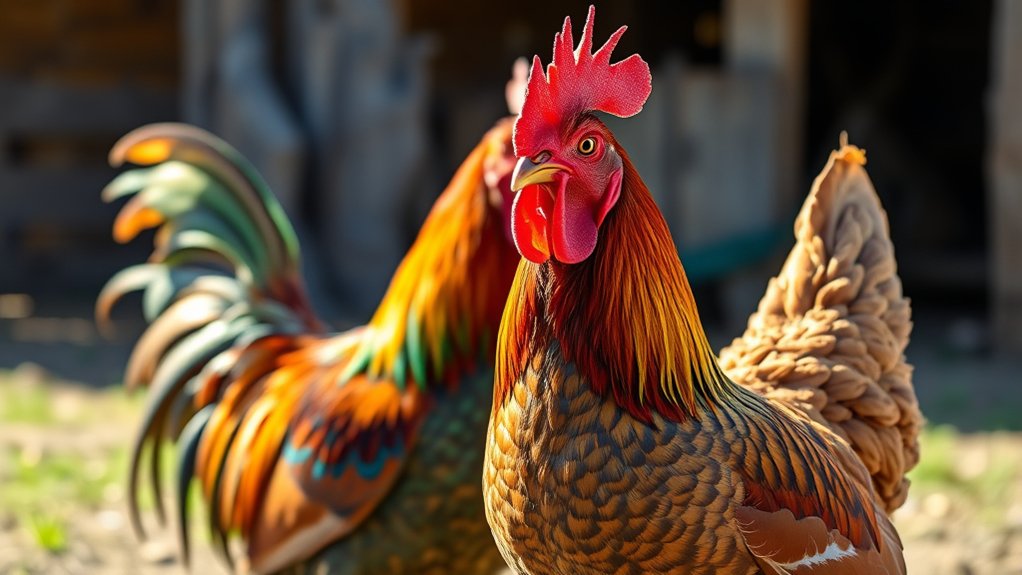
Understanding the biological traits that define chickens helps clarify how roosters and hens belong to the same species. When you look at them closely, both roosters and hens share fundamental behaviors and biological functions that unite them.
For example, both engage in feather grooming to maintain their plumage, which is essential for health and temperature regulation. While hens are known for their role in egg production, the presence of roosters is crucial for fertilizing those eggs, ensuring the continuation of their species.
You’ll also notice that both roosters and hens communicate through similar vocalizations and social behaviors, reinforcing their species connection. By recognizing these shared characteristics, it becomes clear that roosters aren’t a separate entity but integral members of the chicken species, each playing a unique role in its lifecycle and social structure.
This understanding helps you appreciate how diverse roles fit within one species framework.
Physical Differences Between Rooster and Hen Chickens

When you take a closer look at roosters and hens, you’ll notice some clear differences in their plumage and coloration. Roosters tend to have brighter feathers and larger, more pronounced combs. Plus, roosters are usually bigger in size compared to hens.
Plumage and Coloration
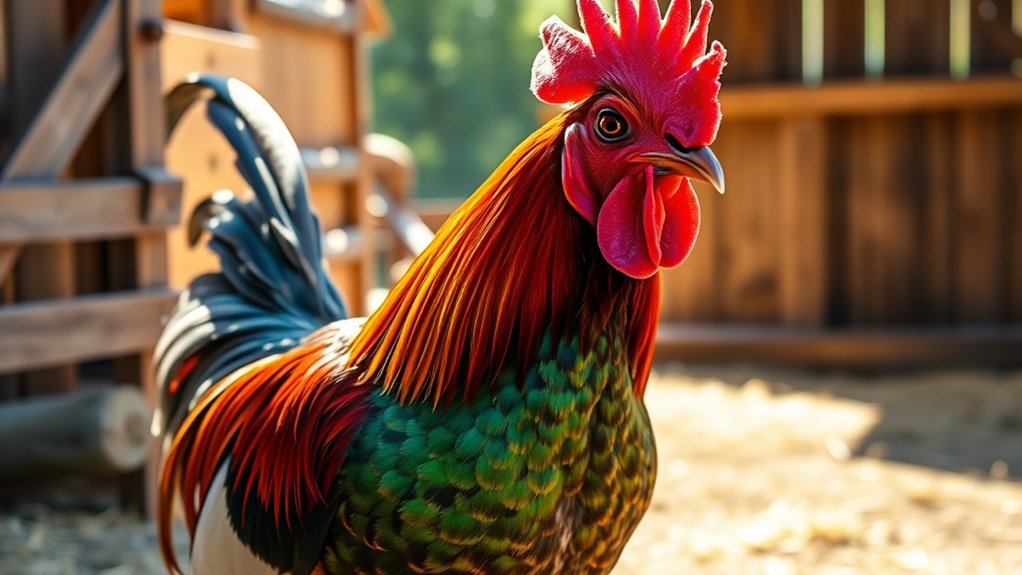
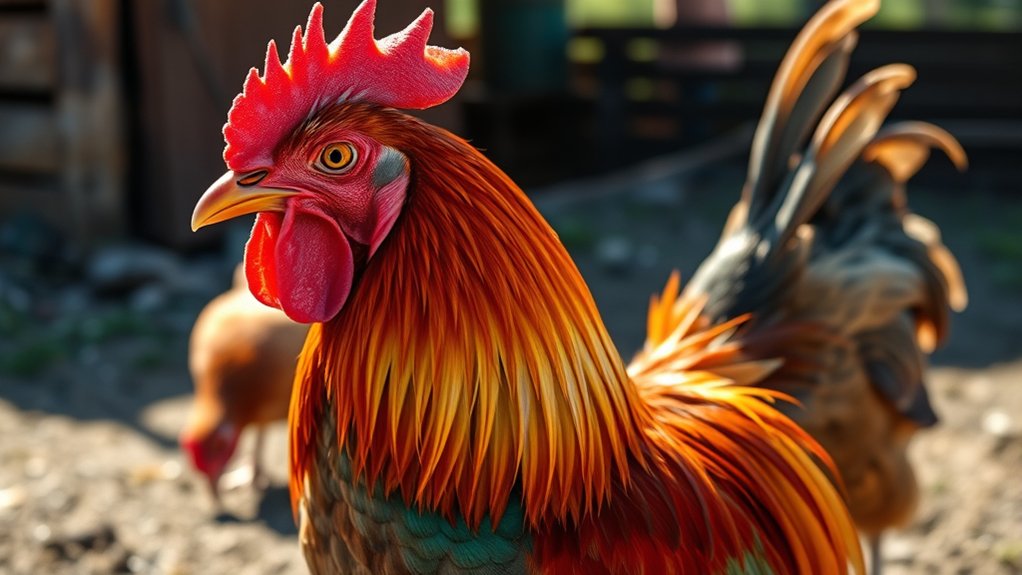
While roosters and hens share many features, their plumage and coloration reveal clear differences that help you tell them apart. Roosters often display more vibrant color variations, showcasing iridescent greens, deep reds, and striking golds. Their feather patterns are more elaborate, especially in the tail and neck areas, where long, flowing feathers create a dramatic effect.
Hens, on the other hand, tend to have subtler, earth-toned feather patterns that provide camouflage and protection. These differences aren’t just for show; they play a role in mating and social dynamics. When you observe a chicken, pay close attention to the brightness and complexity of its feathers. This usually signals whether you’re looking at a rooster or a hen, making plumage and coloration key identifiers in distinguishing between the two.
Size and Comb Shape
The vibrant plumage of roosters often draws your eye first, but their size and comb shape offer additional, reliable clues to their identity. Roosters are generally larger than hens, with more robust bodies that stand out when you compare their feather patterns and tail length.
Their tail feathers are longer and more curved, adding to their striking silhouette. You’ll also notice that roosters have a more pronounced comb, a fleshy crest on top of their heads, that’s larger and often more vivid than a hen’s.
This comb not only helps regulate their temperature but also signals dominance and maturity. When you observe these physical traits together, size, comb shape, tail length, and feather patterns, you can quickly distinguish a rooster from a hen with confidence.
Behavioral Differences Between Rooster and Hen Chickens
Although roosters and hens belong to the same species, you’ll notice they behave quite differently. Roosters often display brighter feather coloration, which plays a key role in their mating behaviors. They strut and crow to attract hens, asserting dominance in the flock.
Hens, on the other hand, focus more on nurturing and foraging, showing less aggressive tendencies.
Here’s a quick comparison of their behavioral differences:
| Behavior Aspect | Rooster |
|---|---|
| Feather Coloration | Bright, vibrant to attract hens |
| Vocalization | Loud crowing to assert territory |
| Aggression Level | Higher, defends flock aggressively |
| Social Role | Protector and leader |
Understanding these behavioral differences helps you appreciate how roosters contribute to the flock’s dynamics, beyond just being male chickens. Their mating behaviors and colorful feathers are essential for reproduction and social order.
How to Identify a Rooster in Your Backyard Flock
Wondering how to spot a rooster among your backyard flock? Start by observing their feather patterns. Roosters usually have more vibrant, iridescent feathers with pointed hackle and saddle feathers, unlike hens, whose feathers tend to be rounder and more subdued.
Look for longer tail feathers that curve elegantly, a clear sign of a rooster. Also, pay attention to their behavior around egg laying habits. Since roosters don’t lay eggs, if a chicken isn’t contributing to the nest, it might be a rooster.
You’ll notice hens actively visiting nesting boxes and producing eggs regularly, while roosters focus on other flock roles. Furthermore, roosters often have larger, brighter combs and wattles compared to hens.
Why Roosters Are Essential in Chicken Flocks
You know, roosters actually play a pretty important role in protecting their flock from predators. They’re always on the lookout and will alert the hens if there’s any danger nearby. Plus, roosters help with breeding by fertilizing the eggs, which keeps the flock growing and healthy. So, when you think about it, roosters are way more than just noisy birds hanging out in your yard!
Roosters Protect Their Flock
How do roosters keep their flock safe? Roosters act as vigilant guardians, watching over hens during their egg laying habits and feeding behaviors. They alert the flock to danger with loud crowing and protective posturing. You’ll notice they’re always on the lookout, making sure hens can lay eggs and feed without constant threats.
Here’s how roosters protect their flock:
- Spot predators early with keen eyesight
- Sound alarms through loud crowing
- Position themselves between threats and hens
- Lead hens to safer feeding spots
- Use aggressive displays to deter intruders
Role in Breeding
Why do roosters play such an essential role in chicken flocks? You need roosters primarily for breeding. They fertilize the hens’ eggs, ensuring you get chicks instead of just eggs for eating.
Without a rooster, the eggs won’t develop into chicks, no matter how well the hens handle egg incubation. Roosters also pass down unique feather patterns and genetic traits, which helps maintain the flock’s diversity and importance.
You’ll notice roosters often have more vibrant and distinct feather patterns, which signal health and genetic strength to hens. So, if you want to grow your flock or preserve specific traits, keeping a rooster is indispensable.
They’re not just protectors; they’re the key to a thriving, reproducing chicken community.
Common Myths About Roosters and Chickens
What makes a rooster different from a regular chicken? You might think roosters are entirely separate from chickens, but they’re just male chickens. Many myths cloud this fact. For example, some believe roosters eat differently, but chicken nutrition needs are quite similar across genders. Also, people often assume roosters live shorter lives, but rooster lifespan can be comparable to hens if cared for properly.
Here are some common myths you might encounter:
- Roosters crow only at dawn; they actually crow throughout the day.
- Roosters are aggressive and harmful to hens by nature.
- Only hens lay eggs, so roosters don’t contribute to the flock.
- Roosters don’t need the same balanced diet as hens.
- Roosters are unnecessary in small backyard flocks.
Understanding these myths helps you appreciate how roosters are simply male chickens with unique roles, not a separate species.
How Rooster Genetics Shape Chicken Breeds
You’ll notice that a rooster’s genetics play a big part in shaping the traits of different chicken breeds. When you check out breed-specific features, the rooster’s hereditary influence really stands out. So, understanding this makes it easier to see how variations pop up within various chicken lines.
Rooster Genetic Influence
Although hens contribute half the DNA, roosters play an essential role in shaping the traits of a chicken breed. Their genetic influence is vital because specific genetic markers carried by roosters determine key characteristics passed down through breeding patterns.
When you select a rooster, you’re guiding the breed’s future by deciding which traits get emphasized or diminished.
Consider how rooster genetic influence affects:
- Feather color and pattern inheritance
- Comb shape and size
- Growth rate and body structure
- Disease resistance traits
- Behavioral tendencies like aggression or calmness
Breed-Specific Traits
Because roosters pass down unique genetic traits, they play an essential role in defining the specific characteristics of each chicken breed. You’ll notice that feather coloration often varies distinctly between breeds, influenced directly by the rooster’s genetics.
Moreover, mating behavior, like courtship displays and dominance, also shapes breed identity. Understanding these traits helps you appreciate how roosters maintain breed standards.
| Breed | Feather Coloration | Mating Behavior |
|---|---|---|
| Rhode Island | Deep red and black | Aggressive, dominant |
| Leghorn | White with black tail | Active, frequent callers |
| Silkie | Soft white or black | Gentle, less aggressive |
| Plymouth Rock | Barred black and white | Moderate, territorial |
| Orpington | Buff or black | Calm, nurturing |
Heredity and Variation
How exactly do rooster genetics influence the traits you see in different chicken breeds? Roosters pass down genetic inheritance that shapes key characteristics in their offspring. This genetic blueprint causes trait variation among breeds, affecting everything from appearance to behavior.
You can see how hereditary factors and subtle genetic differences combine to create the diversity in chickens you’re familiar with.
Consider these aspects influenced by rooster genetics:
- Feather color and pattern
- Comb shape and size
- Body size and structure
- Vocalization patterns
- Temperament and behavior
What Makes a Rooster’s Crow Unique Among Chickens?
When you hear a rooster crow, you’re listening to a sound that stands out distinctly among chickens. Rooster crowing serves as a powerful communication tool, marking territory and signaling dominance. Unlike hens, roosters produce louder, more resonant calls with a clear pattern that’s instantly recognizable.
Their unique vocalizations are shaped by their anatomy, including a specialized syrinx, which allows them to control pitch and volume precisely. You’ll notice that each rooster’s crow varies slightly, influenced by breed, age, and environment, making every call somewhat unique.
This variation helps roosters assert individuality and can even signal their health and strength to other chickens. So, when you hear a rooster’s crow, you’re not just hearing noise. You’re experiencing a distinct vocal signature that plays a vital role in the social dynamics of chickens.
This unique sound sets roosters apart and highlights their role within the flock.
The Role of Roosters in Poultry Farming
Roosters don’t just crow to mark their territory. They play a key role in poultry farming that goes beyond their vocal presence. When managing your flock, roosters help maintain the social structure and reduce conflicts among hens. They also protect the hens from predators, giving you peace of mind. Their presence can improve egg fertilization, which is essential if you’re breeding chickens.
To successfully integrate roosters into your poultry housing and optimize chicken nutrition, keep these points in mind:
- Roosters stimulate hens’ activity and encourage foraging behavior.
- They help alert the flock to food sources, which enhances feeding efficiency.
- Roosters contribute to natural flock dynamics and lower stress levels.
- Proper poultry housing should provide enough space to prevent aggression.
- Balanced chicken nutrition supports the health and vitality of both hens and roosters.
Understanding these roles helps you manage a thriving, balanced flock.
Frequently Asked Questions
Can Roosters and Hens Mate With Other Bird Species?
You can’t expect roosters and hens to successfully mate with other bird species. Bird hybridization is rare and usually happens only between closely related species.
Cross species mating between chickens and other birds typically won’t produce viable offspring because of genetic differences. So, while you might see attempts, they rarely result in hybrids.
If you want hybrids, you’ll need species that are much more closely related than chickens and other common birds.
How Long Do Roosters Typically Live Compared to Hens?
You might think roosters and hens live about the same time, but rooster lifespan is often shorter due to their riskier behavior and territorial fights. Typically, roosters live around 5 to 8 years, while hen longevity can extend to 8 to 12 years, especially in safe environments.
If you’re raising them, remember hens usually outlive roosters because they face fewer physical threats and stressors.
Are Roosters More Aggressive Than Other Male Animals?
Yes, roosters tend to be more aggressive than many other male animals, mainly due to their behavior comparison within their species. You’ll notice they actively defend their flock and establish a strict dominance hierarchy to maintain order.
This aggression helps them protect hens from predators and rivals. If you’re observing different male animals, roosters’ assertiveness and territorial nature usually stand out, especially when keeping control over their group.
What Do Roosters Eat That Differs From Hens?
You wouldn’t expect roosters to have secret gourmet tastes, but their feeding habits do show subtle dietary differences from hens. While both peck at grains, insects, and greens, roosters often prioritize protein-rich insects to fuel their energetic crowing and guarding duties.
You might think they’re picky eaters, but it’s just nature fine-tuning their diet. So, despite similarities, their feeding habits slightly differ to meet their unique needs.
How Do Roosters Contribute to Local Ecosystems?
You’ll see roosters contribute to local ecosystems by controlling insect populations through their foraging habits. Their rooster mating habits help maintain chicken populations, supporting biodiversity.
Plus, their vocalizations serve as natural alarms, alerting other animals to potential dangers and helping maintain balance. By protecting hens and establishing territory, roosters indirectly support plant growth by reducing overgrazing, making them essential players in their environment.
Conclusion
Now that you know a rooster is just a male chicken with unique traits, you’ll never see your backyard flock the same way again. Roosters aren’t just noisy alarm clocks; they’re essential to the chicken family’s story.
Their crow could wake the entire neighborhood, and their role in genetics shapes the future of your flock. So next time you spot a rooster, remember it’s more than a chicken with feathers. It’s the heart of the barnyard and a vital part of what makes a rooster considered a chicken.