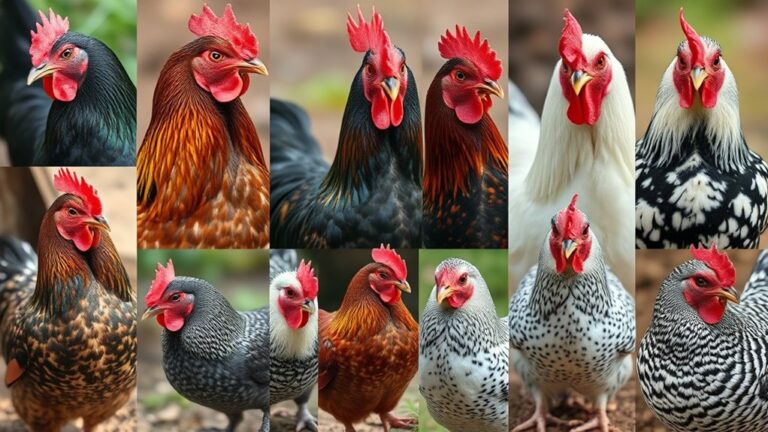
How to Identify the Difference Between Rooster and Chicken
If you’ve ever found yourself confused about whether you’re looking at a rooster or a hen, you’re not alone. Many people struggle with identifying the differences between these birds, especially if they’re new to raising chickens or just curious. Understanding these distinctions can be really helpful, whether you’re managing a backyard flock or simply want to appreciate these feathered friends better.
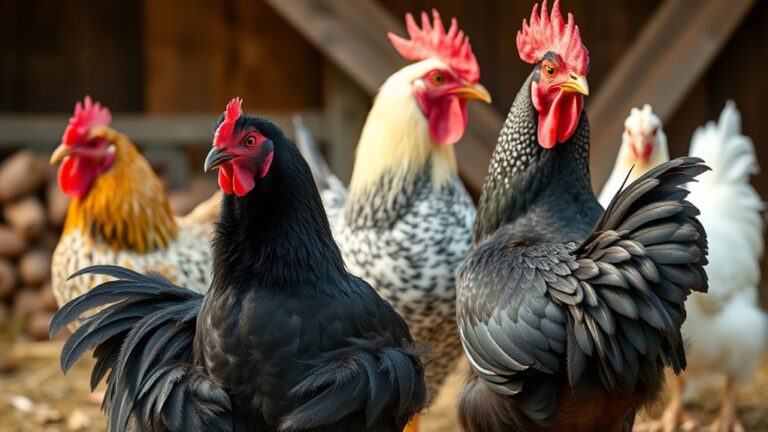
You can tell a rooster from a hen by looking at size, body shape, and plumage. Roosters are bigger and more upright, with bright, shiny feathers, long curved tails, and larger, vivid combs and wattles.
Hens are smaller, rounder, with subtler colors and shorter tails.
Behavior helps too. Roosters crow loudly and act dominant, while hens cluck softly and focus on nesting.
If you want to spot these differences confidently, there’s more detail to examine.
Key Takeaways
- Roosters are larger with brighter, iridescent feathers and long, curved tail feathers. Hens have smaller, muted plumage and shorter tails.
- Roosters have bigger, more vivid combs and wattles compared to the smaller, paler ones on hens.
- Roosters crow loudly and assert dominance, whereas hens produce softer, repetitive clucking sounds.
- Roosters stand upright with a confident posture and raised tails. Hens appear rounder and more cautious with lower tails.
- Only hens lay eggs and exhibit nesting behavior, while roosters guard the flock and display territorial aggression.
Tell a Rooster From a Hen at a Glance

Although roosters and hens share many features, you can usually tell them apart at a glance by observing their size, plumage, and posture. These differences didn’t just happen randomly; they stem from historical origins and selective breeding influences.
Over centuries, humans bred roosters for traits like larger size and more striking plumage to assert dominance and attract mates. Meanwhile, hens were bred primarily for egg-laying efficiency, which shaped their subtler appearance.
When you look at a bird, you’re seeing the result of these breeding choices that emphasize the rooster’s boldness and the hen’s practicality. Understanding this background helps you recognize why roosters often stand taller and carry themselves with a confident posture compared to hens.
Physical Differences Between Roosters and Hens
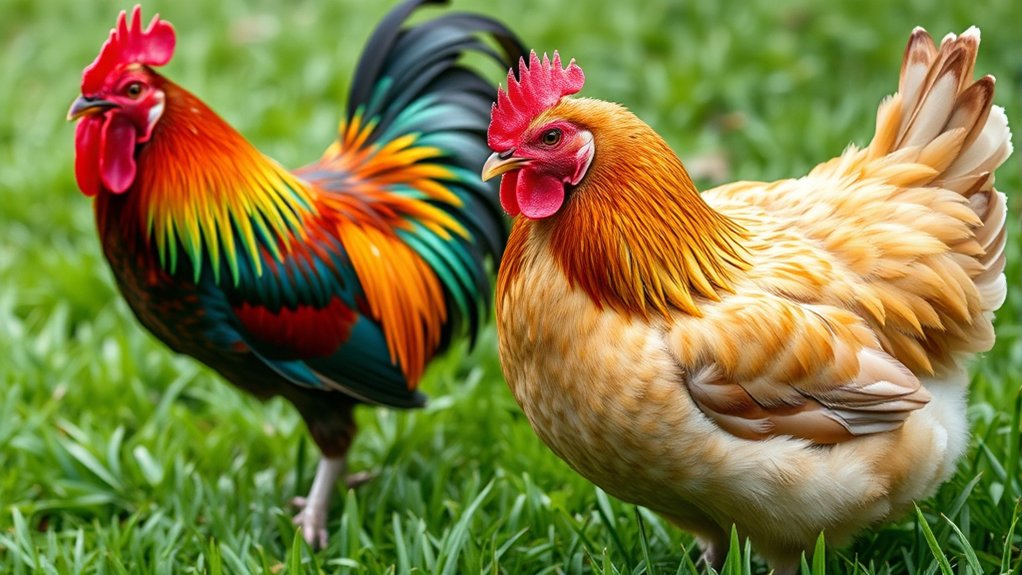
When you observe roosters and hens more closely, their physical traits reveal clear distinctions beyond size and posture. Roosters typically have brighter, more vibrant plumage and longer tail feathers, which help them stand out. Their combs and wattles are usually larger and more pronounced as well.
Hens, on the other hand, show subtler coloring, which suits their egg laying habits and nesting behaviors by offering better camouflage while protecting their eggs. You’ll also notice hens have a more rounded body shape to accommodate egg production and nesting.
Since hens focus on egg laying habits, their physical design supports this role, unlike roosters who don’t lay eggs but are built for protection and dominance. These physical differences are closely tied to their natural roles, making it easier for you to tell them apart when you pay attention to these details.
Use Size and Body Shape to Tell Them Apart
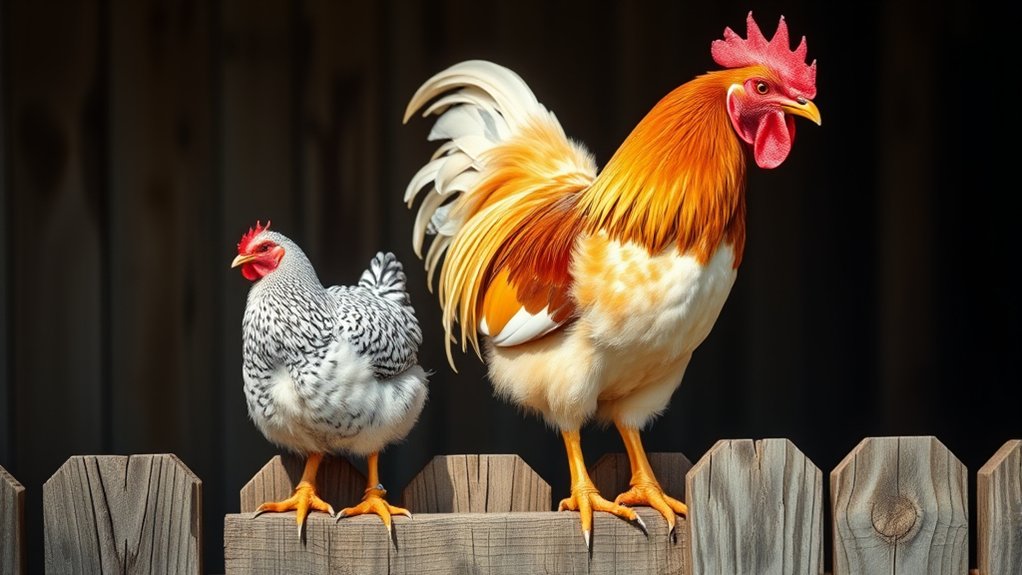
Since roosters and hens serve different roles, you can often tell them apart by their size and body shape. Roosters are generally larger and more robust, while hens have a more compact and rounded form. Here’s how to spot the difference:
- Body Size: Roosters tend to be bigger to protect the flock, which reflects their role in defense and dominance. Hens stay smaller, which suits their nesting behaviors and egg-laying needs.
- Shape Differences: Roosters have a more upright stance with longer legs and a broader chest. Hens appear rounder and fuller, adapting to their feeding habits and nesting comfort.
- Movement and Posture: Roosters move with confidence, often strutting to assert dominance. Hens move more cautiously, focused on feeding habits and preparing nesting sites.
Examine Combs and Wattles to Identify Roosters
Size and posture give you a good starting point, but looking closely at the combs and wattles reveals even clearer signs of whether you’re dealing with a rooster or a hen. Roosters typically have larger, more pronounced combs and wattles compared to hens.
These fleshy features not only help regulate body temperature but also serve as visual signals influenced by genetic markers tied to sex. When you examine a bird’s comb and wattles, you’re fundamentally seeing physical traits shaped by its breeding history.
Roosters bred for certain traits often display brighter, more vivid colors and bigger combs because selective breeding emphasizes dominance and attractiveness. In contrast, hens usually have smaller, paler combs and wattles.
Read Feather Colors and Patterns for Gender Clues
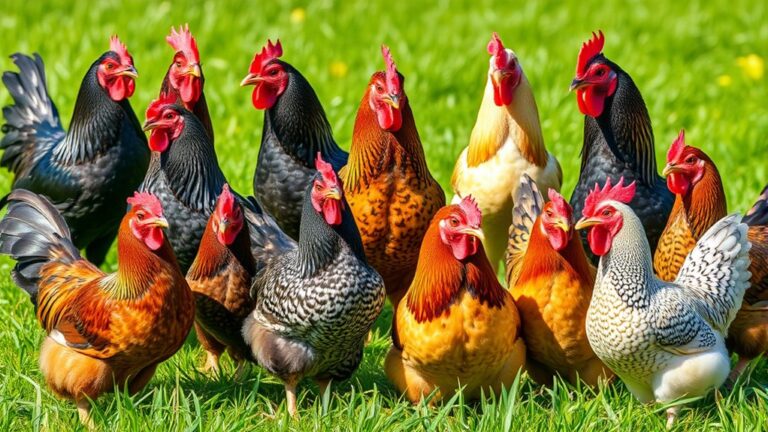
You can often spot a rooster by its bright, iridescent feathers and bold patterns. Hens, on the other hand, usually have more muted colors and simpler patterns that help them blend in. So, paying attention to these differences will give you clear clues about their gender.
Common Rooster Feather Traits
How can you tell a rooster apart from a hen just by looking at their feathers? Roosters have distinct feather traits that set them apart, even if you’re observing them during egg laying or feeding times. Here’s what to look for:
- Long, Curved Tail Feathers: Roosters sport long, glossy tail feathers that curve dramatically, unlike the shorter, rounder tails of hens.
- Pointed Saddle Feathers: These feathers near the back are sharp and elongated in roosters, while hens have more rounded ones.
- Bright, Iridescent Plumage: Roosters often display vibrant, shiny feathers with iridescence, signaling maturity and dominance.
Hen Feather Color Patterns
When you examine hen feather color patterns, you’ll notice they tend to be more subdued and consistent compared to roosters. This difference largely stems from feather pattern genetics, which influence the subtle, uniform colors hens display.
Unlike roosters, hens rarely have the bright, iridescent hues or striking tail feathers. Furthermore, molting cycle differences play a role: hens undergo a more gradual molt, maintaining a steady feather appearance throughout the year. This steadiness helps you identify hens by their even, often earth-toned plumage.
Spot Roosters by Tail Shape and Posture
Although tail shape and posture might seem subtle, they offer clear clues to spot a rooster among chickens. When you look closely, roosters show distinct differences in tail feather arrangement and how they carry themselves. Here’s what to watch for:
- Tail Feather Arrangement: Roosters have long, curved tail feathers that arch gracefully. These sickle feathers stand out compared to the shorter, more rounded tails of hens.
- Posture and Stance: A rooster’s posture is confident and upright. They often hold their bodies higher and chest forward, projecting dominance.
- Tail Position: Roosters tend to keep their tails raised high, while hens usually have tails that angle downward or stay more level.
Recognize Behavioral Differences Between Roosters and Hens
You’ll notice that roosters often have louder and more frequent vocalizations than hens. They also tend to be a bit more aggressive and like to assert dominance within the flock. So, by paying attention to these behaviors, you can usually tell them apart pretty quickly.
Vocalization Patterns
How can you tell a rooster from a hen just by listening? Roosters and hens have distinct vocalization patterns that help you identify them easily. Here’s what to listen for:
- Vocal tone: Roosters have a louder, more resonant vocal tone compared to hens, who produce softer clucks.
- Sound duration: Rooster calls, especially their crowing, last longer and are more drawn out, while hens make short, quick clucking sounds.
- Call purpose: Roosters often crow to mark territory or signal presence, while hens cluck mainly to communicate with their chicks or express contentment.
Aggression And Dominance
Listening closely to their calls gives you clues about their identity, but observing behavior reveals even more. Roosters often display clear aggression and dominance, asserting their place at the top of the social hierarchy.
You’ll notice them exhibiting strong territorial behavior, defending their space against intruders with aggressive postures or even chasing other chickens away. Hens, on the other hand, tend to be less confrontational and more submissive, usually avoiding conflict to maintain group harmony.
When you watch closely, roosters’ dominant actions make it easier to distinguish them from hens, especially during disputes or when protecting the flock. Understanding these behavior patterns helps you accurately identify which birds are roosters and which are hens, based on their role in the flock’s social structure.
Identify Rooster Crows vs. Hen Clucks
What sets a rooster’s crow apart from a hen’s cluck is more than just volume. It’s about purpose and tone. When you listen closely, rooster crowing sounds are sharp, loud, and often signal territory or alert the flock. In contrast, hen clucking patterns are softer and used mostly for communication within the group.
To help you identify the differences, focus on these three key points:
- Purpose: Roosters crow to announce dominance or warn of danger. Hens cluck to keep chicks calm or signal food.
- Tone: Rooster crows are loud and piercing; hen clucks are gentle and repetitive.
- Frequency: Roosters crow mainly at dawn and sporadically during the day, while hens cluck consistently throughout their daily activities.
What to Check When Roosters and Hens Look Similar
Recognizing the sounds roosters and hens make gives you a helpful clue, but sometimes their appearances can be confusing, especially when they share similar features. When this happens, focus on egg laying habits. Only hens lay eggs, so if you see a bird consistently nesting or producing eggs, you’re likely looking at a hen.
Also, observe feather shedding patterns. Hens often shed feathers around their vent area during egg laying cycles, while roosters tend to have more uniform feather replacement without this specific pattern. Furthermore, hens usually have a rounder body shape suited for brooding, whereas roosters may maintain a slightly leaner, more upright stance.
Checking comb size and wattles can help, but these traits vary by breed. So, when roosters and hens look alike, rely on behavior linked to egg laying and feather changes to guide your identification. This approach helps you make accurate distinctions without confusion.
Avoid Common Mistakes When Identifying Roosters
Don’t just go by comb and wattle size—they can be different from bird to bird. Also, keep an eye out for subtle feather color differences because those can throw you off. And don’t forget to watch their behavior; that’s often a better clue to spotting a rooster.
Comb And Wattle Size
Although comb and wattle size can be a helpful clue, they aren’t always reliable on their own when identifying roosters. Some hens develop larger combs and wattles, especially as they mature. To avoid mistakes, consider these points:
- Check the proportional size: Roosters usually have larger, more pronounced comb and wattle compared to hens, but size varies by breed.
- Look beyond comb and wattle: Compare the beak size too. Roosters often have thicker, more robust beaks.
- Observe behavior alongside features: Aggressive or dominant behavior often comes with larger combs and wattles in roosters.
Feather Color Variations
When you examine feather colors, keep in mind that roosters often display more vibrant and varied hues than hens. Their feathers tend to have a noticeable feather sheen, giving them a glossy, almost iridescent look, especially on their necks and tails.
In contrast, hens usually have duller, more uniform feather colors. Pay attention to molt patterns, too. Roosters often molt less uniformly and at different times compared to hens, which can affect how their colors appear throughout the year.
Avoid assuming dull feathers always mean a hen; molt timing can influence color brightness temporarily. By focusing on feather sheen and understanding molt patterns, you’ll avoid common mistakes and confidently distinguish a rooster’s colorful plumage from a chicken’s more subdued tones.
Behavioral Differences Observed
Feather colors can give you clues, but behavior often provides clearer signs to tell roosters apart from hens. Pay close attention to their actions, as these reveal more about their identity than just looks. Here are three behavioral differences to watch for:
- Roosters usually exhibit dominant behavior, often crowing loudly and guarding the flock, while hens stay quieter.
- Diet habits differ; roosters tend to be more assertive when feeding, sometimes pushing hens aside.
- Nesting behaviors are a giveaway. Hens actively build nests and sit on eggs, whereas roosters don’t engage in these activities.
Frequently Asked Questions
Can Roosters and Hens Be Identified by Their Eggs?
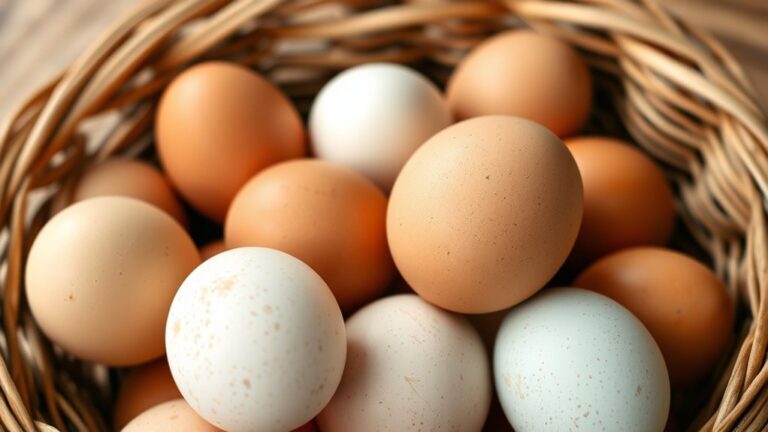
You can’t identify roosters and hens by their eggs because only hens lay eggs. Egg color variations depend on the hen’s breed, not gender. Roosters don’t produce eggs at all.
Instead, you’ll notice vocalization differences: roosters crow loudly, while hens cluck softly. So, eggs won’t help you tell them apart, but listening to their sounds and observing behavior will give you clear clues.
Do Roosters and Hens Have Different Dietary Needs?
Yes, roosters and hens have different dietary needs due to their feeding habits and nutritional requirements. Roosters typically need more protein to support muscle development and energy for mating displays, while hens require extra calcium for eggshell production.
You should adjust their feed accordingly. Provide a balanced diet with higher protein for roosters and guarantee hens get enough calcium, like crushed oyster shells, to keep them healthy and productive.
How Does the Age of a Bird Affect Gender Identification?
You’ll find that age plays a big role in maturity and gender differentiation. Younger birds often lack clear age-related plumage changes, making it tricky to tell males from females.
As they mature, roosters develop more vibrant feathers and distinct combs, while hens stay subtler. So, the older your bird gets, the easier it is to spot those gender differences thanks to these visible changes in their plumage and physical traits.
Are There Specific Breeds Where Roosters and Hens Look Identical?
Yes, some breeds have roosters and hens that look nearly identical, making it tough to tell them apart. You’ll find that breed specific markings and feather coloration patterns don’t differ much between genders in these cases.
For example, breeds like the Sebright or the Campine show very subtle differences. You’ll need to rely on behavior or physical traits like comb size, as feather patterns won’t give you clear clues.
Can Behavior During Mating Season Help Identify a Rooster?
Yes, behavior cues during mating season can help you identify a rooster. Roosters often display dominant behaviors like strutting, crowing loudly, and protecting the flock.
Their vocal differences are clear. They crow to attract hens and warn off rivals, unlike hens who cluck softly. You’ll notice a rooster’s assertive posture and frequent vocalizations, making it easier for you to distinguish him from hens based on these mating season actions.
Conclusion
Now that you know the key differences between roosters and hens, spotting them becomes as easy as pie. Remember, their size, combs, feather colors, and behaviors are your trusty guides in this feathered puzzle. Don’t let similar looks fool you, trust your eyes and ears.
With these tips, you’ll confidently tell a rooster from a hen every time. This way, your backyard becomes a well-read story of clucks and crows, making it simple to identify the difference between rooster and chicken.