How to Take Care of Chickens in 5 Easy Steps
If you’re new to raising chickens, you’re not alone in feeling a bit overwhelmed. Many people struggle with knowing how to properly care for their flock and keep them healthy and happy. The good news is, with the right guidance, taking care of chickens can be simple and rewarding.
To take care of chickens in five easy steps, start by choosing a breed that fits your goals—eggs, meat, or pets—and suits your climate.
Build a safe, well-ventilated coop with secure locks to protect them.
Feed your chickens balanced, high-quality feed with supplements like oyster shells for strong eggs.
Check their food and water daily, secure the coop at night, and watch for any health issues.
Collect eggs each morning and keep the coop clean to guarantee a happy flock.
There’s plenty more to help your chickens thrive.
Key Takeaways
- Choose a chicken breed that fits your goals, climate, and space, such as egg layers, meat birds, or pets.
- Build a secure, well-ventilated coop with proper drainage, predator-proofing, and comfortable roosting and nesting areas.
- Provide high-quality feed with necessary protein, calcium, and supplements like oyster shells for healthy eggs and digestion.
- Offer fresh water daily, keep feeders clean, secure the coop at dusk, and monitor chickens for health issues.
- Collect eggs every morning, clean the coop weekly, remove waste, and inspect predator barriers regularly for safety.
Choose the Best Chicken Breed for Your Backyard
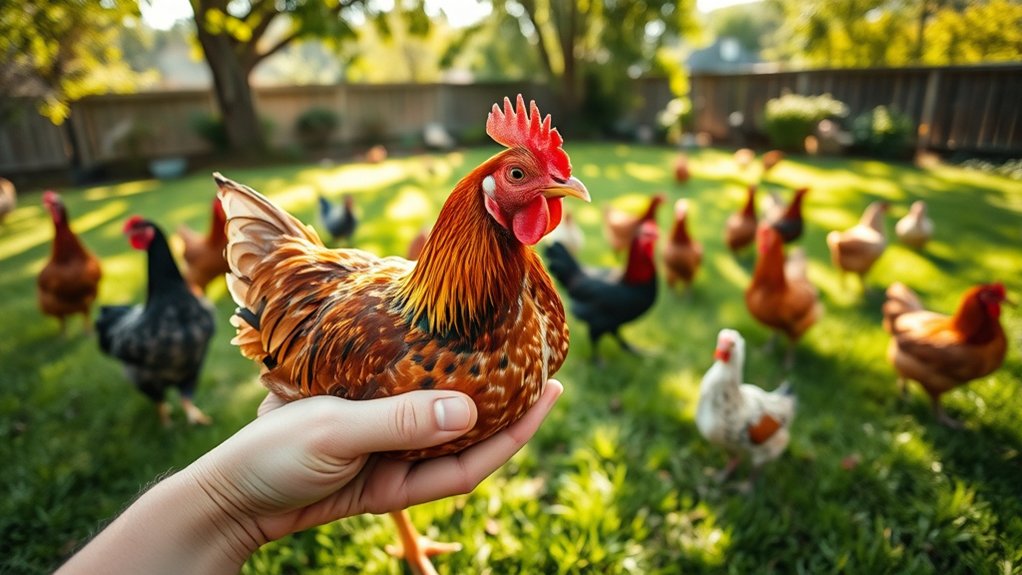
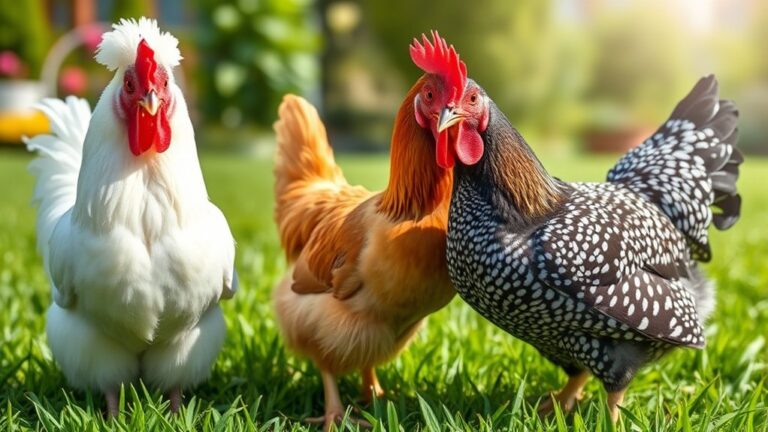
When choosing the best chicken breed for your backyard, consider your primary goals, whether it’s egg production, meat, or pets. You’ll find a broad chicken breed variety suited for different purposes, so knowing what you want helps narrow your choices.
For example, if you want consistent egg layers, breeds like Leghorns or Rhode Island Reds offer great backyard compatibility. On the other hand, if you’re after meat, Cornish Cross chickens grow quickly and efficiently.
For pets or ornamental purposes, Silkies or Bantams stand out with their unique appearance and friendly nature. Make sure the breed you pick matches your climate and space, as some breeds handle heat or cold better and require different space allowances.
Taking the time to research chicken breed variety ensures your flock thrives in your backyard setting, making your chicken-keeping experience enjoyable and rewarding.
Create a Cozy, Safe Coop Your Chickens Will Love
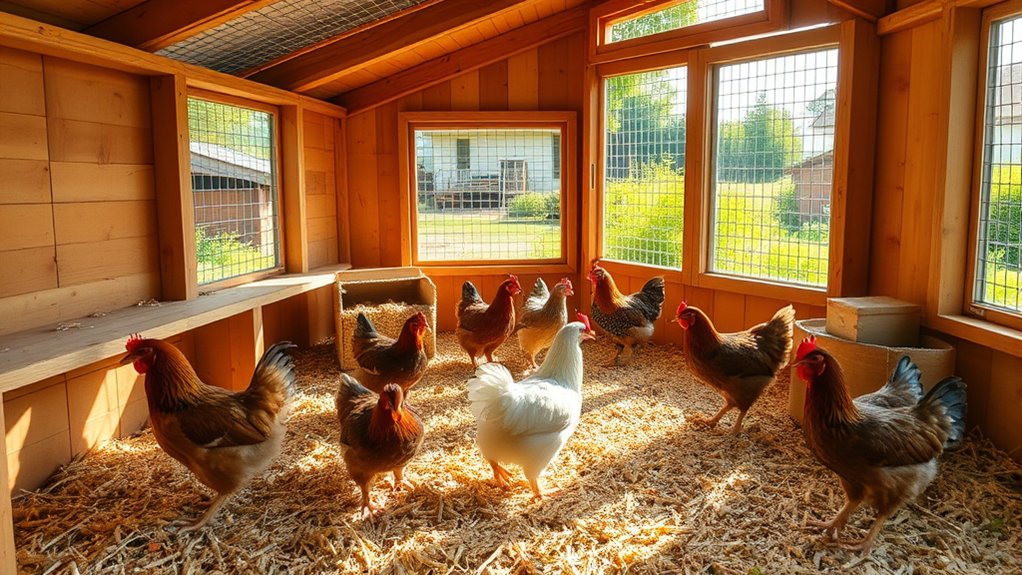
Although selecting the right breed is essential, providing a cozy, safe coop is just as important to keep your chickens healthy and happy. Start by choosing a spot with good drainage to avoid dampness.
Make sure your coop offers proper ventilation to prevent moisture buildup and respiratory issues. You want fresh air without drafts chilling your birds. Use sturdy materials and reinforce doors, windows, and vents with hardware cloth to guarantee predator protection.
Raccoons, foxes, and even neighborhood dogs can pose threats, so secure locks and elevated coop floors help keep predators out. Inside, provide enough space for each chicken to roost comfortably and include nesting boxes for laying.
Adding clean bedding like straw or wood shavings keeps the coop warm and dry. Regularly clean the coop to maintain hygiene and prevent pests. By creating a well-ventilated, predator-proof, and cozy coop, you’re giving your chickens a safe haven they’ll thrive in.
Give Your Chickens the Right Food for Healthy Eggs
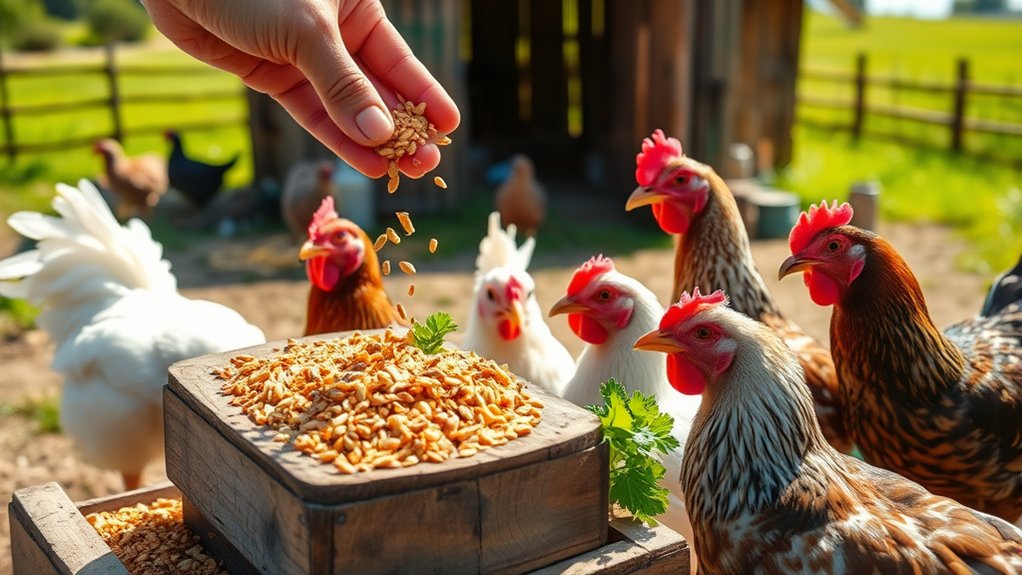
Once your chickens have a safe and comfortable home, focusing on their diet will help you get healthy, nutritious eggs. Providing the right food guarantees they stay strong and lay consistently. Here’s how you can optimize their nutrition:
- Balanced Feed: Choose a high-quality layer feed that meets all their protein and calcium needs. This supports eggshell strength and overall health.
- Nutritional Supplements: Add supplements like crushed oyster shells or grit to aid digestion and boost calcium intake. This is essential for healthy eggs.
- Feeding Schedule: Stick to a consistent feeding schedule, offering food twice daily. This routine prevents overeating and stress, helping maintain steady egg production.
Keep Your Chickens Healthy With Simple Daily Care
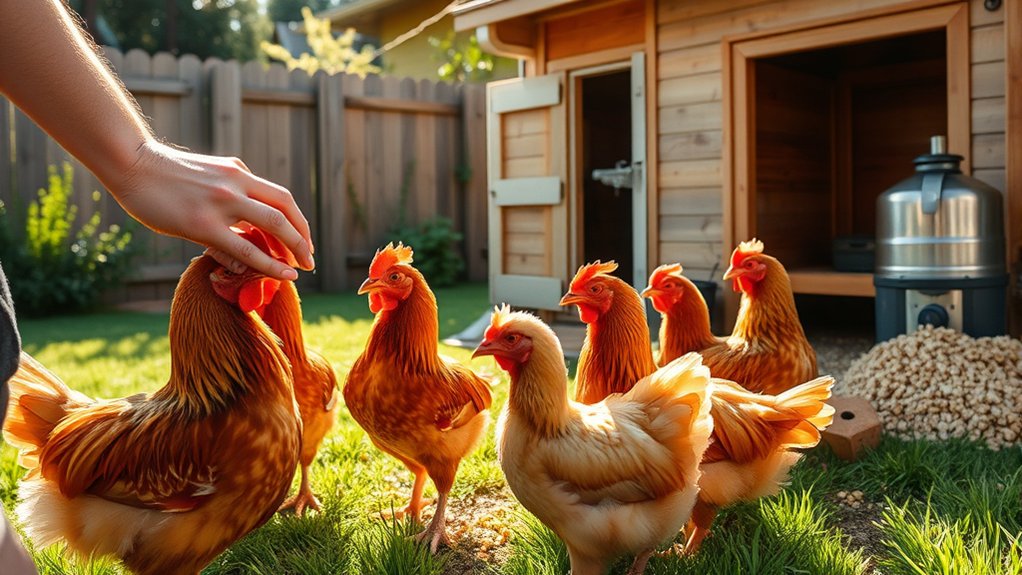
To keep your chickens healthy, you need to perform simple daily care tasks that prevent illness and boost their well-being. Start by sticking to consistent feeding routines, offering fresh water and balanced feed each day. This helps maintain their nutrition and supports strong immune systems.
Make sure to check their food and water containers regularly to keep them clean and free from contamination.
Predator prevention is just as vital. Secure your coop with sturdy locks, and inspect fencing daily to spot any weak points or holes. Close the coop doors at dusk to keep nighttime predators out.
You can also use motion-activated lights or alarms to deter unwanted visitors. Spend time observing your chickens for signs of illness or distress, such as lethargy or unusual behavior, so you can address issues quickly.
With these straightforward routines, you’ll create a safe environment that keeps your flock thriving every day.
Collect Eggs and Keep the Coop Clean
Keeping your coop clean and collecting eggs daily play essential roles in maintaining a healthy flock. By doing this, you prevent the buildup of waste that can attract pests and diseases, ensuring your chickens stay healthy. Plus, gathering eggs regularly reduces the risk of breakage and discourages predators from being lured by the scent.
Here’s how to stay on top of it:
- Collect eggs every morning to keep them fresh and avoid attracting predators to your coop area.
- Clean the coop thoroughly once a week, removing droppings and replacing bedding to maintain hygiene and support your feeding schedules effectively.
- Inspect and secure predator protection measures like locks and fencing daily to safeguard your chickens and eggs.
Sticking to this routine helps balance feeding schedules and predator protection, creating a safe, clean environment that benefits both you and your flock.
Frequently Asked Questions
How Do I Protect Chickens From Predators at Night?
To protect your chickens from predators at night, focus on nighttime security by securing a predator-proof coop. Make sure the coop has sturdy locks, solid walls, and hardware cloth instead of chicken wire, which predators can tear through.
Close all openings and avoid gaps under doors. You can add motion-activated lights or alarms to deter intruders. Regularly inspect the coop for weak spots and reinforce them to keep your flock safe while they sleep.
Can Chickens Be Trained to Do Simple Tricks?
Yes, you can train chickens to do simple tricks by using consistent training techniques and positive reinforcement. Start by observing their behavior to understand what motivates them, like treats or praise.
Use short, frequent sessions to teach commands like coming when called or pecking a target. Patience and consistency are key, and by paying close attention to their behavior, you’ll make the training process smoother and more enjoyable for both you and your chickens.
What Should I Do if My Chicken Stops Laying Eggs?
Don’t worry if your chicken stops laying eggs. It’s often normal and temporary.
To boost egg production, check that you’re meeting her nutritional needs with a balanced diet rich in calcium and protein. Also, make sure she gets enough light and stress-free rest.
Sometimes age or seasonal changes affect laying, so be patient. By adjusting her diet and environment, you’ll encourage her to start producing eggs again soon.
How Do I Introduce New Chickens to My Flock?
You’ll want to introduce new chickens slowly to avoid stress and fighting. Start by keeping them separated but close enough to see each other, letting them get used to feather grooming and their new surroundings.
After a few days, supervise short interactions, watching for pecking order disputes. Gradually increase their time together until they peacefully coexist.
This careful approach helps your flock settle smoothly and keeps everyone safe and healthy.
What Are Signs of Common Chicken Diseases?
Imagine spotting signs like a Victorian-era telegram alert, early and urgent. You’ll notice symptoms like lethargy, reduced appetite, sneezing, or unusual droppings. Symptom identification is vital for quick action.
Look for swollen eyes or combs, coughing, or pale wattles. Regular chicken vaccination helps prevent serious diseases, but if your chickens show these signs, isolate them and consult a vet.
Acting fast keeps your flock healthy and productive.
Conclusion
Taking care of chickens is easier than you think. Just follow these five steps like a seasoned farmer tending to a secret garden.
By choosing the right breed, building a cozy coop, feeding them well, keeping them healthy, and collecting eggs regularly, you’ll create a happy backyard flock.
Remember, even a small effort every day can turn your chicken-keeping journey into a rewarding adventure, much like nurturing your own little piece of Eden. Taking care of chickens is truly a simple and fulfilling experience.