
How to Identify the Difference Between Chicken and Hen
If you’ve ever found yourself confused about whether you’re looking at a chicken or a hen, you’re not alone. Many people struggle with telling them apart, especially since the terms are often used interchangeably. Understanding the difference can make a big difference, whether you’re a backyard farmer, a cook, or just curious about these familiar birds.
You can identify a hen as an adult female chicken, especially one that lays eggs, while “chicken” refers to all birds of the species regardless of age or gender.
Look for softer, uniform feathers, smaller combs, and a compact body to spot a hen. Their nesting behaviors and gentle clucking also give them away.
Understanding these details helps you tell hens apart from roosters and chicks, and there’s plenty more to uncover about their unique roles.
Key Takeaways
- “Chicken” refers to the entire species, including males, females, and juveniles, while “hen” specifically means an adult female chicken.
- Hens have softer, more uniform feather colors and smaller, less pronounced combs and wattles compared to roosters.
- Hens are generally smaller and more compact with shorter, sturdier legs suited for nesting activities.
- Behavioral cues like quiet nesting and soft clucking indicate a hen, contrasting with louder calls and dominant actions of roosters.
- Identifying hens focuses on adult female traits and egg-laying roles, while “chicken” broadly covers all ages and sexes.
What Does “Chicken” Mean Compared to “Hen”?
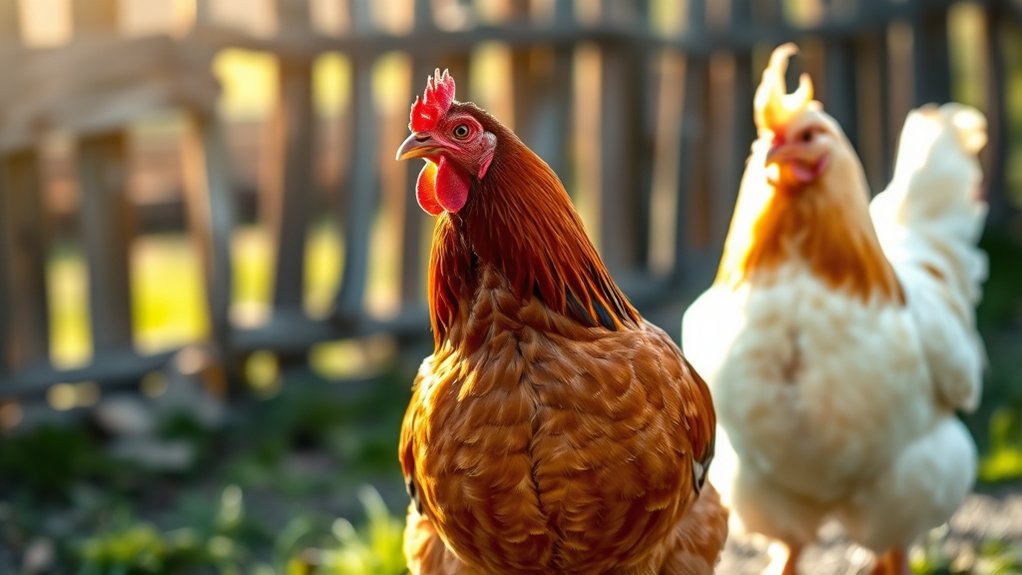
How do you distinguish between a chicken and a hen? The term “chicken” is a general label for the species, covering all genders and ages. When you say “hen,” you specifically refer to an adult female chicken.
Understanding this distinction helps clarify gender roles within poultry. Hens are primarily known for their role in laying eggs, while roosters, the males, tend to protect the flock.
When it comes to culinary uses, both hens and chickens as a whole are used for meat, but hens are often valued for their eggs as well. So, while all hens are chickens, not every chicken is a hen.
Recognizing this difference ensures you’re clear whether you’re talking about the species in general or focusing on the female bird, especially since their roles and uses vary considerably. This knowledge helps you appreciate the specific functions and terminology linked to poultry.
How Age and Gender Define Different Chickens
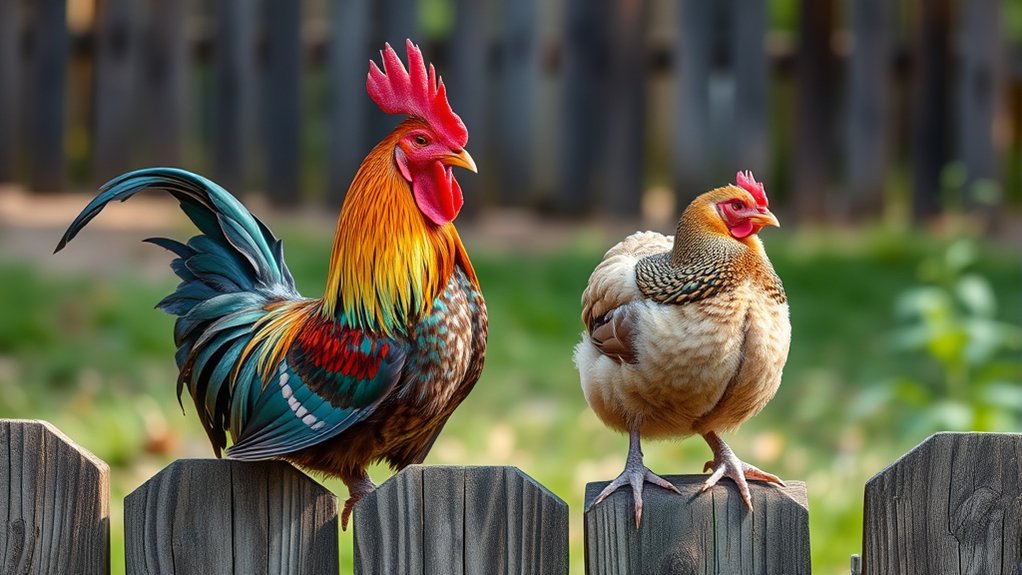
You’ll notice that a chicken’s age plays a big role in its appearance and behavior. And gender? That brings some clear differences too, like comb size and feather patterns. So, let’s take a closer look at how these age and gender traits help you tell them apart.
Age Indicators In Chickens
Although age and gender may seem like straightforward ways to tell chickens apart, recognizing the subtle differences requires careful observation. You’ll notice feeding habits shift as chickens grow, with younger birds eating more frequently.
Molting patterns also signal age. Older chickens molt annually, replacing feathers, while younger ones molt less predictably. These signs help you determine their stage in life.
| Age Stage | Feeding Habits | Molting Patterns |
|---|---|---|
| Chick (0-6 mo) | Frequent, high energy foods | Minimal or no molting |
| Juvenile (6-12 mo) | Moderate, balanced diet | Beginning molting |
| Adult (1-3 yrs) | Regular, stable diet | Annual molting |
| Senior (3+ yrs) | Reduced intake, selective | Less frequent, patchy molting |
Gender Characteristics Explained
Why does gender matter when identifying chickens? Understanding gender helps you recognize specific traits that distinguish hens from roosters, especially as they grow. Feather color often varies, with males displaying more vivid hues. Beak shape can also give clues. Roosters sometimes have thicker, more pronounced beaks.
Age and gender together shape these characteristics, helping you tell them apart.
Notice these differences:
- Roosters flaunt bright, iridescent feather color.
- Hens have softer, duller feathers for camouflage.
- Roosters’ beak shape tends to be more robust and curved.
- Hens usually sport a smaller, straighter beak.
Physical Differences Overview
Understanding gender traits gives you a solid foundation for spotting key physical differences in chickens as they age. One of the most noticeable changes is feather coloration. Hens typically develop softer, more muted tones, while roosters show brighter, more vibrant feathers.
You’ll also observe differences in beak shape. Hens usually have shorter, more curved beaks compared to the longer, straighter beaks of roosters. As chickens mature, these traits become more pronounced, helping you identify their gender more easily.
Furthermore, hens tend to have rounder bodies, while roosters appear more angular and muscular. By paying attention to these physical markers, you’ll confidently distinguish between hens and roosters, even at different life stages.
How to Identify a Hen by Appearance
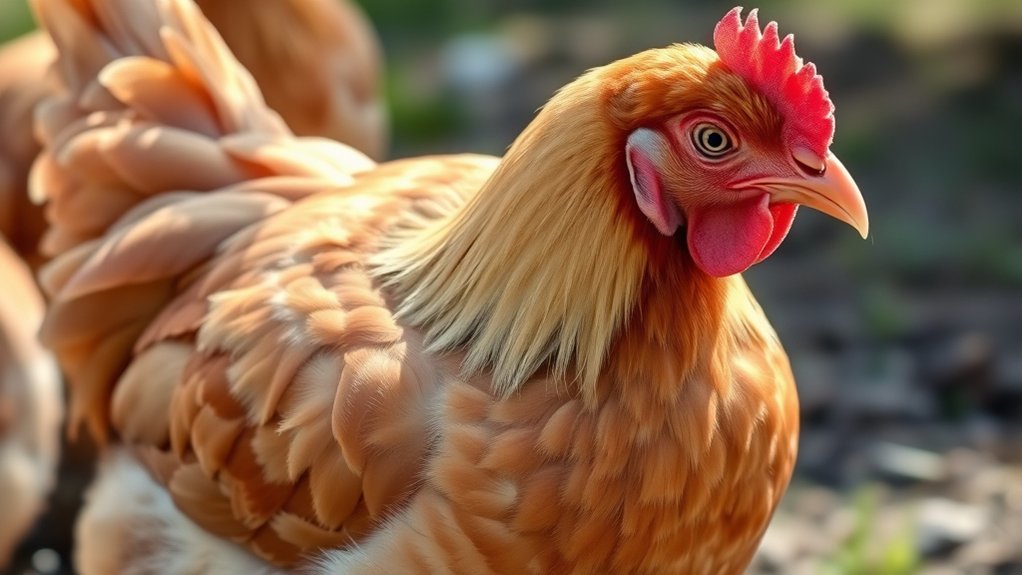
When you look closely at a hen, you’ll notice several key features that set her apart from a chicken. Hens typically have a more refined appearance, and certain traits help you identify them by sight alone.
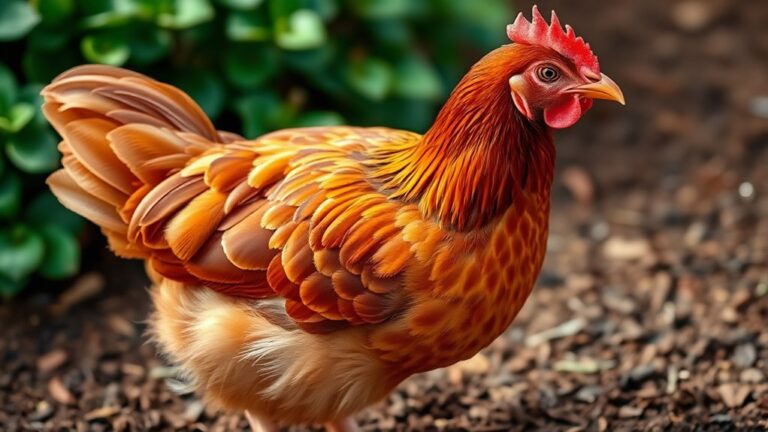
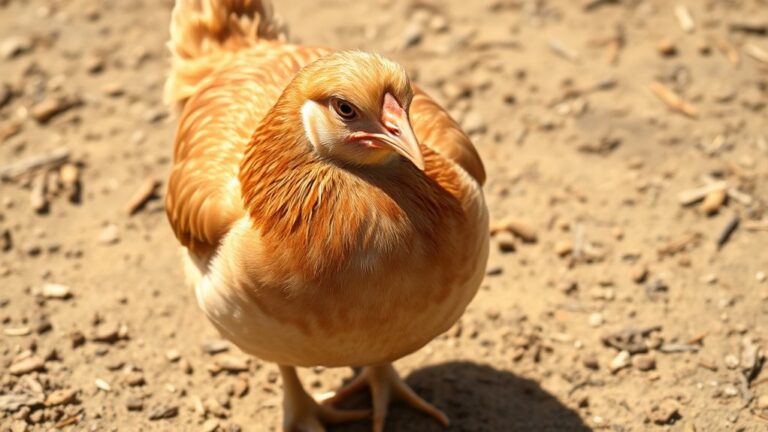
Pay attention to her feather coloration, which tends to be softer and more uniform compared to the often varied patterns in other chickens. The beak shape is another clue; hens usually have a smaller, more delicate beak suited for pecking at grains and insects.
Here are some visual cues to help you spot a hen:
- Feather coloration: smooth, consistent hues, often earth-toned like browns or creams
- Beak shape: short and gently curved, not thick or hooked
- Body size: generally smaller and more compact
- Comb and wattles: modest in size and less pronounced than males
How to Tell Hens Apart From Roosters and Chicks
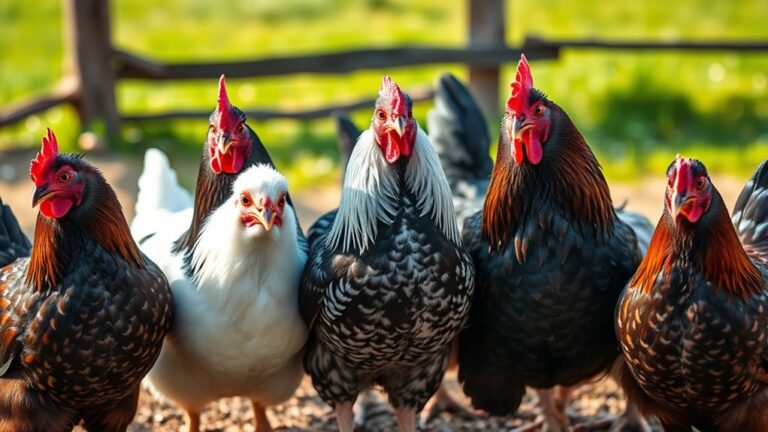
How can you quickly distinguish hens from roosters and chicks? First, look at the feather color. Roosters often sport brighter, more vibrant feathers with iridescent highlights, while hens display more subdued, uniform tones. Chicks have fluffy, soft down feathers that haven’t yet developed the adult feather color patterns.
Next, check the beak shape. Hens and roosters share similar beak shapes, but chicks have smaller, more delicate beaks. Moreover, roosters tend to have larger combs and wattles compared to hens, which can help you tell them apart when combined with feather color differences.
What Hen Behavior Can Tell You
You can learn a lot just by watching hen behavior closely. For example, pay attention to their nesting habits—where and how they like to settle in. Also, listen to their unique vocalizations; each hen seems to have her own way of chatting. And don’t forget to watch how they interact with others in the flock. These little clues are really helpful when you want to tell hens apart from other chickens.
Nesting Habits Observed
Why do hens spend so much time in their nests? It’s not just about laying eggs. Nesting habits reveal a lot about a hen’s health and routine. When you observe hens, their feeding habits often shift. They eat less while nesting to conserve energy.
Molting patterns also affect nesting. Molting hens might stay in nests longer due to discomfort or vulnerability.
Look for these signs:
- Hen carefully arranging nesting material for comfort
- Staying quietly in the nest for extended periods
- Occasionally leaving the nest briefly to feed or drink
- Returning promptly to the nest after brief breaks
Vocalization Patterns Noted
Observing a hen’s nesting habits gives clues about her daily routine and well-being, but her vocalizations reveal even more about her mood and intentions. You’ll notice hens use vocal communication to express comfort, alertness, or distress.
For example, soft clucking often signals contentment, while louder, sharper calls might indicate alarm or a warning to others. Pay attention to noise levels: a calm hen keeps sounds minimal, but increased vocal activity usually means something’s up.
By tuning into these patterns, you can better understand her needs and environment. Recognizing these subtle sounds helps you differentiate a hen from other chickens, as hens tend to vocalize more purposefully around nesting or when protecting their young.
Listening carefully makes identifying and caring for your hens easier.
Social Interactions Displayed
How do hens interact within their groups, and what can these behaviors reveal? Observing hen social dynamics gives you valuable insights for effective farm management and poultry nutrition.
Hens establish clear hierarchies, and their interactions reflect health and well-being. When you notice their behavior, you can adjust feeding strategies and environment to optimize productivity.
Look for these social cues in your flock:
- Pecking order disputes showing dominance and stress levels
- Cooperative feeding patterns indicating good nutrition balance
- Mother hens protecting chicks, signaling healthy maternal instincts
- Resting spots chosen by hens, revealing comfort and space needs
Why Hens Matter in Poultry Farming
Although chickens and hens might seem interchangeable, hens play an essential role in poultry farming because they are responsible for egg production and sustaining flock populations. When you’re managing a flock, you’ll notice hens often have distinct feather coloration compared to roosters, which helps you quickly identify them.
Their leg length is usually shorter and sturdier, providing better support for nesting and daily activities. Understanding these physical differences makes it easier for you to monitor their health and behavior.
Since hens are the backbone of a productive poultry farm, recognizing their characteristics helps you maintain a balanced and thriving flock. By paying attention to traits like feather coloration and leg length, you can ensure proper care and optimize your farm’s efficiency.
This knowledge not only aids in daily management but also supports breeding decisions, helping you keep your poultry operation sustainable and successful.
Why Hens Are Key Egg Producers
You’ll notice hens play an essential role in egg production because their bodies are designed for it. See, their reproductive cycle lets them lay eggs regularly. That’s exactly why farmers rely on them so much. Once you understand this cycle, it’s easy to see why hens are the main source of eggs.
Egg Production Role
Why do hens play such a crucial role in egg production? Unlike roosters, hens are biologically designed to lay eggs. While roosters focus on protecting the flock and mating, hens handle the essential task of generating eggs, especially in breeds known for high productivity.
When you observe a hen, imagine her nesting quietly in a cozy spot and laying eggs regularly, often daily. She chooses safe, secluded places for her clutch and displays calm, focused behavior during egg-laying.
Certain chicken breeds, like Leghorns and Rhode Island Reds, excel in egg production, making hens indispensable. You’ll notice that without hens, egg production simply wouldn’t happen, no matter how active or protective the roosters are. Understanding this helps you appreciate hens’ unique role in the life cycle of chickens.
Hens’ Reproductive Cycle
How do hens manage to produce eggs so consistently? It all comes down to hen anatomy and their efficient reproductive cycle. Inside a hen, the ovary releases yolks regularly, which travel through the oviduct where layers of albumen, membranes, and shell form.
This process usually takes about 24-26 hours, allowing hens to lay nearly one egg daily. To keep this cycle steady, poultry nutrition plays an essential role. Providing hens with balanced feed rich in calcium, protein, and vitamins supports healthy egg formation and shell strength.
If nutrition falters, egg production slows or eggs weaken. Understanding this cycle helps you appreciate why hens, not just any chicken, are specialized egg producers. They combine their unique anatomy with proper care to keep eggs coming consistently.
Common Misconceptions About “Chicken” and “Hen”
Although the terms “chicken” and “hen” are often used interchangeably, many people don’t realize that they refer to different things. You might think a hen is just another word for chicken, but a hen specifically means a female chicken, usually mature and laying eggs.
This distinction matters, especially in cultural symbolism where hens often represent motherhood and nurturing, while chicken can refer to the species as a whole. In culinary uses, recipes might call for chicken meat generally, but knowing the difference helps you choose the right cut or preparation.
Common misconceptions include:
- Thinking “hen” means any chicken, regardless of sex or age
- Believing all chicken meat comes from hens only
- Assuming cultural references to “hen” apply universally to all chickens
- Confusing egg-laying hens with roosters or younger chickens
Understanding these points sharpens your awareness of language and practical uses related to poultry.
When to Use “Hen” vs. “Chicken”
Since the terms “hen” and “chicken” aren’t interchangeable, you’ll want to use them carefully depending on the context. When discussing urban farming or backyard poultry, “hen” specifically refers to an adult female chicken, especially one laying eggs.
In contrast, “chicken” is a broader term that includes both males and females of all ages. Using “hen” clarifies your focus on female birds, which is essential for egg production conversations.
| Term | Meaning | When to Use |
|---|---|---|
| Hen | Adult female chicken | Talking about egg-laying or females |
| Chicken | Any chicken, male or female | General discussions or meat context |
| Urban Farming | Small-scale city poultry keeping | Use “hen” for females in this context |
| Backyard Poultry | Home-raised chickens | Distinguish hens when discussing eggs |
| Market | Refers to chicken meat or live birds | Use “chicken” for selling or buying |
Tips for Choosing Between Hens and Other Chickens
When selecting birds for your flock, you’ll want to focus on specific traits that match your goals, whether for egg production, meat, or breeding. Choosing between hens and other chickens means paying attention to factors like feather coloration and dietary preferences. These can indicate breed suitability and health needs.
Consider these tips to make an informed choice:
- Observe feather coloration to identify breeds known for high egg production or hardiness.
- Assess dietary preferences to ensure your birds thrive on available feed and supplements.
- Evaluate the bird’s age and laying history if your priority is consistent egg-laying hens.
- Look for physical traits such as comb size and body shape that differentiate hens from roosters or younger chickens.
Frequently Asked Questions
What Are the Nutritional Differences Between Chicken Meat and Eggs?
You’ll find a nutritional comparison shows chicken meat is rich in protein and low in fat, making it great for muscle building. Eggs, on the other hand, offer a higher egg protein content per serving, along with essential vitamins and healthy fats.
When choosing between them, consider your dietary needs: chicken meat fuels your body with lean protein, while eggs provide a balanced mix of protein, fats, and nutrients.
How Do Hens Contribute to Backyard Pest Control?
Ever wonder how hens help manage pests naturally? You’ll find they’re excellent at natural predator control, actively hunting insects, grubs, and even small rodents in your backyard.
Their pest deterrent behavior means they scratch and peck around, reducing the need for chemicals. By letting hens roam freely, you’re encouraging a natural balance, making your garden healthier and pest-free without extra effort.
Isn’t that a win-win?
Can Hens Live Together With Other Poultry Species?
Yes, hens can live with other poultry species if you practice good mixed flock management. You’ll need to introduce them gradually to reduce aggression and guarantee everyone has enough space and resources.
Also, focus on predator protection since a mixed flock might attract more attention. Secure coops and runs will keep all your birds safe.
What Are Common Health Issues Specific to Hens?
You’ll often face hen health challenges like egg laying issues, including soft shells or decreased production. Hens can also suffer from respiratory infections, mites, and egg binding, where an egg gets stuck.
To keep them healthy, maintain clean living conditions, provide a balanced diet, and watch for any changes in behavior or appearance. Early detection and proper care will help you manage these common hen health problems effectively.
How Does Hen Housing Affect Egg Production Quality?
You know what they say, “A happy home makes a happy hen.” Hen housing directly affects egg quality because comfortable, clean, and well-ventilated spaces reduce stress and disease risks.
When you provide proper hen housing with enough space, good bedding, and controlled temperature, your hens lay stronger shells and better-tasting eggs. So, investing in the right environment isn’t just about comfort; it’s about ensuring first-rate egg quality every time.
Conclusion
Now that you know the key differences between chickens and hens, you’ll be able to tell them apart with ease. Understanding their age, gender, and behavior puts you ahead of the game.
Remember, regarding egg production, hens wear the crown. So, don’t put all your eggs in one basket. Use this knowledge to choose wisely and care for your flock like a pro.
By keeping these tips in mind, identifying the difference between chicken and hen becomes simple and practical.