Bantam Chickens Beginner’s Guide
If you’ve ever wanted to raise chickens but felt limited by space or worried about managing large birds, you’re not alone. Many people struggle to find the right type of chicken that fits well in smaller backyards without compromising on personality or charm.
Bantam chickens are tiny versions of standard chickens, and they’re a great pick if you want small, lively birds that fit well in compact backyard spaces. You’ll find popular breeds like Silkies, Cochins, Sebrights, Dutch Bantams, and Japanese Bantams, each with its own personality.
Give them 2 to 4 square feet indoors, a secure coop, proper feed, and gentle handling.
With a bit of care, they’re rewarding pets, and there’s plenty more to learn next.
Key Takeaways
- Bantam chickens are small, bold chickens that need proper care, housing, and nutrition despite their tiny size.
- They suit beginners and small spaces because they are easy to handle and adapt well to calm flocks.
- Popular bantam breeds include Silkies, Cochins, Sebrights, Dutch Bantams, and Japanese Bantams.
- Keep bantams in secure, clean, well-ventilated coops with 2 to 4 square feet per bird indoors.
- Feed age-appropriate starter and grower feed, monitor health daily, and collect eggs regularly.
What Are Bantam Chickens?

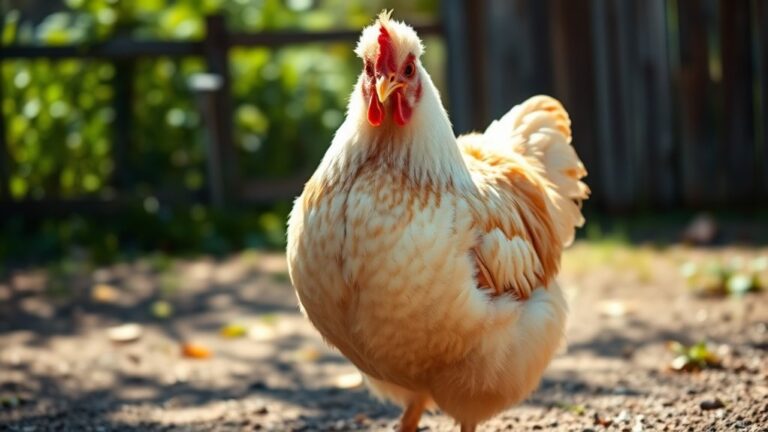
Bantam chickens are tiny versions of standard chickens, known for their small size, lively personalities, and wide variety of breeds. You’ll find that bantams aren’t a separate species; they’re miniature forms of larger chicken breeds or true bantams with no standard-sized counterpart.
Bantam chickens are tiny, lively birds, either miniature versions of larger breeds or true bantams.
Their bantam characteristics include lighter bodies, smaller eggs, and compact combs or feathers that often mirror the look of full-sized birds. Because of their scale, you can keep them in less space, but they still need proper care, shelter, and nutrition.
Bantam behavior is often bold, curious, and energetic, so don’t be surprised if they dart around quickly or act more confident than their size suggests. Some breeds are calm and friendly, while others can be flighty or feisty.
When you learn to recognize their size, breed type, and habits, you’ll understand what makes these little chickens unique and easy to enjoy.
Why Choose Bantam Chickens?
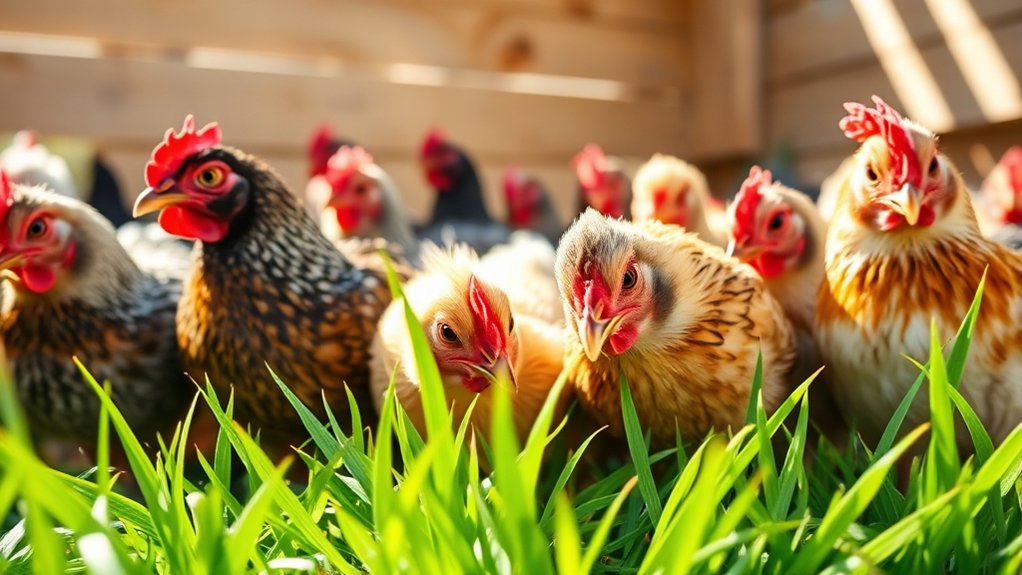
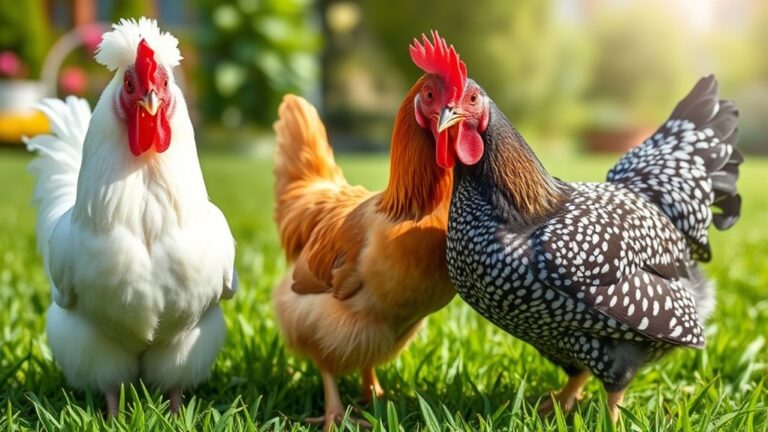
If you want chickens that take up less space but still bring plenty of personality, bantams are an easy choice. You can keep them in smaller yards, and they’ll still reward you with lively activity and cheerful chatter. Their compact size makes them easier to handle, especially if you’re new to poultry or have children helping with care.
You’ll also notice that bantam personalities often shine through in bold, curious ways, making daily upkeep feel more interactive than routine.
Tiny feet scratching softly in the coop
Bright eyes watching your every move
Fluffy bodies perched on low rails
Gentle clucks drifting across the garden
With the right setup, bantam temperament can suit many backyards, because these birds often adapt well to calm, consistent care. They don’t need huge runs to stay content, and their charm can make your flock feel fuller without crowding your space.
Popular Bantam Breeds

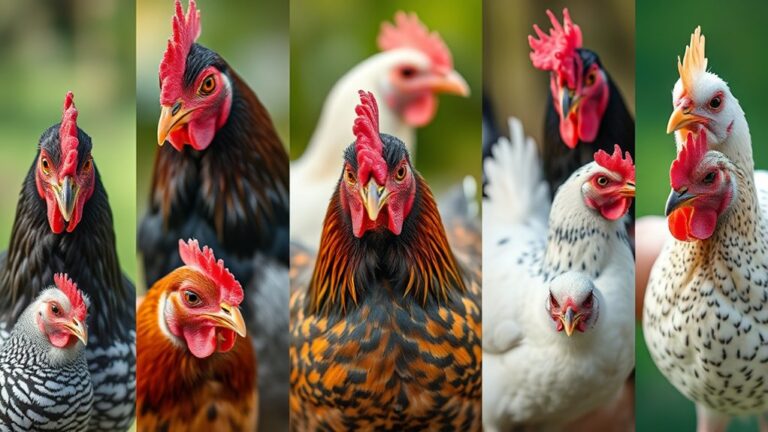
Once you’ve decided bantams fit your space and routine, the next step is finding the breed that matches your goals. Silkies are a favorite if you want calm birds with fluffy plumage and gentle bantam personalities.
Silkies are a favorite for calm birds with fluffy plumage and gentle bantam personalities.
Cochins bring round bodies, feathered legs, and sweet temperaments that make them easy to enjoy. Sebrights stand out with laced feathers and active, confident behavior, so they suit you if you like lively birds.
Dutch Bantams offer striking color patterns and alert curiosity in a compact package. Belgian d’Uccle and Booted Bantams appeal if you want ornamental charm and friendly attitudes.
You’ll also find colorful varieties in breeds like Japanese Bantams, which have short legs and striking tail carriage. As you compare breeds, think about temperament, appearance, egg-laying habits, and whether you want pets, show birds, or both.
Each bantam breed brings something distinct, so choose the one that fits your style best.
How Much Space Bantams Need
Even though bantams are small, they still need enough room to move, scratch, and roost comfortably. When you plan bantam space requirements, aim for about 2 to 4 square feet per bird inside and several times more outdoors. Crowding stresses them, sparks pecking, and keeps you from seeing their playful behavior.
You can choose bantam housing options that fit your yard, flock size, and climate, but don’t squeeze too many birds into a tight spot. Give them space that feels airy and easy to clean, and you’ll notice calmer birds and cleaner feathers.
A tiny flock pecking at scattered grain
A bantam stretching on a low perch
Soft bedding under quick little feet
Sunlight pooling across an open run
If you’re unsure, start a bit larger than you think you need. Extra room gives you flexibility as your flock grows and helps your bantams stay active, content, and healthy.
Set Up a Safe Bantam Coop
You’ll want a coop that fits your bantams comfortably, but also keeps things simple and easy to clean. It’s important to make sure the walls, floor, and windows block predators. Don’t forget to seal any gaps they might use to sneak inside. Also, adding secure latches and sturdy wire will help keep your birds safe both day and night.
Coop Size And Layout
A bantam coop doesn’t need the footprint of a full-sized chicken house, but it does need enough room for your birds to move comfortably without crowding. Give each bird a small, clean perch, then plan for easy cleaning and daily access.
Keep coop ventilation high enough to refresh the air without creating drafts, and place nesting boxes where hens can slip in quietly. Use a simple layout that separates sleeping, laying, and feeding zones so traffic stays smooth.
- Low roosts for tiny feet
- Dry floor space for scratching
- Nesting boxes at a calm corner
- A door wide enough for you
When you arrange the interior this way, your bantams stay active, relaxed, and easy to care for.
Predator-Proof Protection
Because bantams are small, predators can reach them more easily, so build the coop with tight hardware cloth, secure latches, and no gaps large enough for a snout or paw. You should also bury wire at least 12 inches deep or add an apron around the run to stop digging.
Choose sturdy fencing options that keep out raccoons, foxes, dogs, and hawks, and cover the top if aerial attacks are common. Inspect doors, hinges, and corners often, because even a tiny opening invites trouble.
At night, lock your birds inside and remove feed to avoid attracting pests. Match your defenses to local predator types, then test every latch yourself so you know the coop stays safe, dry, and secure every day.
Feed Bantam Chickens the Right Diet
What should bantam chickens eat to stay healthy and active? You should base their diet on a quality feed that meets their nutritional requirements, then adjust portions so they don’t overeat. Offer a bantam-sized feeding schedule with fresh water every day, and keep treats to a small share of the diet.
- Crumble or pellets in a low dish
- Chopped leafy greens like kale
- Occasional grains, seeds, or fruit bits
- A clean waterer beside the run
You can scatter feed lightly to encourage natural pecking, but avoid rich scraps, moldy food, and salty leftovers. Bantams have small bodies, so even a little excess can upset their balance. Watch their droppings, energy, and appetite to see if the ration works.
If they range on grass, they’ll still need a complete feed to cover gaps. When you feed consistently, your birds stay bright, alert, and ready to scratch, perch, and investigate each day.
How to Raise Bantam Chicks
To raise bantam chicks, you’ll want to start with the basics. That means setting up a warm, dry, and draft-free space for them. It’s important they stay cozy and comfortable.
Next, make sure they always have clean water and starter feed available. This helps them stay healthy and grow strong. Don’t forget, close daily care is key. Checking on them regularly ensures they’re doing well.
With the right setup and a little attention each day, your bantam chicks can thrive right from day one. It’s a rewarding experience to watch them grow!
Brooding Basics
When you bring bantam chicks home, start them in a clean, draft-free brooder with steady heat, fresh water, and a soft, non-slip floor. Use reliable heat sources, like a brooder lamp or plate, and watch the brooder temperature closely. This way, chicks can move closer or farther away as needed.
Aim for a warm zone that feels cozy, not stifling. Check for signs like panting or huddling to make sure they’re comfortable.
Tiny chicks tucked under gentle warmth
Bright eyes peeking from fluffy down
A quiet corner free of wind
Soft bedding beneath careful feet
Keep the setup simple and calm. You’ll help your bantams settle faster when they feel safe, warm, and able to explore their space.
Feeding And Care
Once your bantam chicks are warm and settled, focus on steady feed, clean water, and close daily care. You should use a starter crumble made for chicks because bantam nutrition needs extra protein and tiny particles they can eat easily.
Keep a simple feeding schedule and offer fresh feed all day during the first weeks. Check that each chick drinks well, but keep waterers shallow to prevent accidents.
| Age | Feed | Care |
|---|---|---|
| 0–2 weeks | Chick starter | Warm, dry brooder |
| 2–6 weeks | Starter crumble | Daily checks |
| 6+ weeks | Grower feed | More space |
Watch droppings, energy, and weight. If a chick seems weak, separate it, warm it, and contact a poultry vet.
Prevent Common Bantam Health Problems
Because bantams are small and delicate, you’ll need to stay ahead of health issues before they turn serious. Check your birds daily for dull eyes, sneezing, limping, or swollen feet, and isolate any bird that seems off.
Check your bantams daily for subtle signs of illness, and isolate any bird that seems off.
Keep bedding dry, feeders clean, and water fresh to reduce common ailments like coccidiosis and respiratory trouble. Ask your avian vet about bantam vaccinations and parasite control, especially if you add new birds to the flock.
- A bright comb and alert posture
- Clean feathers around the vent
- Smooth walking on coop boards
- Steady eating and drinking at dawn
You should also watch for mites, worms, and overgrown nails, which can sap energy fast. Provide balanced feed, grit, and space to move so your bantams stay strong.
When you spot changes early, you can treat problems sooner and keep your flock lively, feathered, and productive.
How to Handle Bantams Calmly
Healthy bantams are easier to manage when you handle them calmly, so move slowly and speak softly each time you approach. Your calm energy helps shape bantam temperament, and they’ll trust you faster when you stay steady.
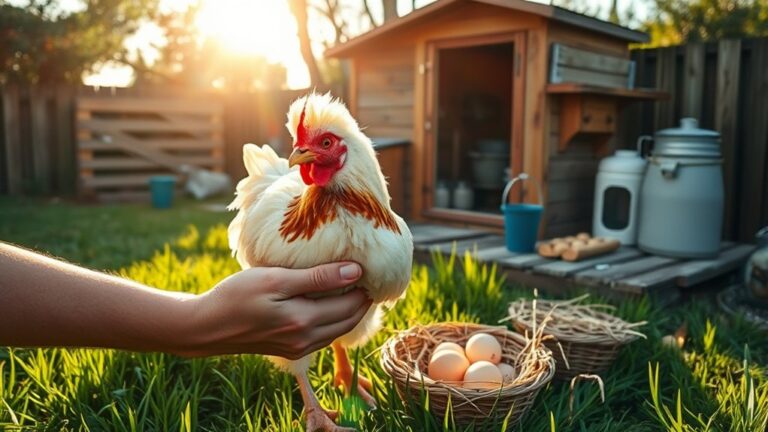
Use consistent handling techniques: crouch to their level, let them see your hands, and support both the breast and feet before lifting. Keep sessions brief and predictable, especially if a bird seems jumpy or unsure.
| Situation | What you do | Why it helps |
|---|---|---|
| Approaching | Walk slowly | Reduces fear |
| Lifting | Support body | Prevents flapping |
| Releasing | Set down gently | Builds trust |
If a bantam tenses up, pause and try again later. Never chase or squeeze them because that can make future handling harder. With patience, you’ll keep them relaxed and easier to manage.
Collect Eggs and Breed Bantams
Collect eggs daily so they stay clean, reduce breakage, and don’t sit long enough to lose freshness. Check nests each morning and again late afternoon, especially when hens crowd one box. Handle each shell with two fingers, then store it pointy end down in a cool tray. Good egg collection helps you track fertility and spot problems fast.
When you’re ready to breed, pick healthy birds with bright eyes, tight feathers, and steady size. Choose one rooster for a small group and keep the breeding pen quiet. Follow these breeding tips:
- Soft straw in the nest
- A calm hen settling in
- Tiny speckles on fertile eggs
- Warmth from a broody body
Mark dates so you know when eggs should hatch. If you candle them after a week, you’ll catch clear failures early and save space for stronger chicks.
Frequently Asked Questions
How Long Do Bantam Chickens Typically Live?
Bantam chickens typically live 5 to 8 years, though you can help some reach 10 years or more with excellent care. Bantam breeds often outlive larger chickens, but lifespan factors like genetics, diet, housing, stress, and veterinary care matter a lot.
If you keep them safe, clean, and well fed, you’ll boost their chances of a longer, healthier life. Regular health checks also make a big difference.
Can Bantams Safely Free-Range With Larger Chickens?
Yes, you can free-range bantams with larger chickens, but you’d better not expect a fairy tale where everyone shares crumbs and hugs. You need to watch bantam behavior closely, because bigger birds can bully them.
Good flock dynamics depend on space, hiding spots, and calm introductions. Use safety measures like supervised outings and separate roosts. Smart feeding strategies also help so your bantams don’t get shoved out at mealtime.
Do Bantam Roosters Make Good Backyard Pets?
Yes, bantam roosters can make good backyard pets if you choose a calm bird and handle him regularly. You’ll often enjoy their friendly demeanor and lively social behavior, which can make them entertaining companions.
Still, you should watch for bossiness, noise, and occasional aggression during breeding season. If you give him space, respect, and consistent care, you can usually keep a bantam rooster as a charming backyard pet.
Are Bantam Eggs Smaller Than Standard Chicken Eggs?
Yes, bantam eggs are usually smaller than standard chicken eggs, like little jewels beside regular ones. You’ll notice bantam egg size is often about half to two-thirds the size of a large egg, though it varies by breed.
Don’t worry, though. Bantam egg colors can be just as diverse as standard eggs, ranging from white and cream to blue, green, and brown. They’re small, but they’re mighty in flavor and allure.
Can Bantams Tolerate Cold Winter Weather?
Yes, bantams can tolerate cold winter weather, but you need to help protect their chicken health. You should provide a dry, draft-free coop, plenty of bedding, and easy access to fresh water.
Because bantams are small, they lose heat faster than larger birds, so you’ll want to watch for shivering or frostbite. In very cold weather, you can add extra insulation and keep their combs and feet safe.
Conclusion
Bantam chickens can bring a lot of joy to your backyard, whether you want friendly pets, fresh eggs, or a fun breeding project. By giving them proper space, a safe coop, good care, and gentle handling, you’ll help them thrive.
Keep an eye on their health, and you’ll avoid many common problems. Remember, slow and steady wins the race, and with bantams, patience pays off in healthy, happy birds. Bantam chickens truly reward those who care for them with time and attention.