How to Raise Barred Rock Chickens
If you’ve ever tried raising Barred Rock chickens, you know it’s not always easy to keep them healthy and happy. You’re not alone—many people struggle with creating the perfect environment that encourages good laying and growth.
Finding the right care routine can feel overwhelming, but with a little guidance, you can enjoy a thriving flock.
To raise Barred Rock chickens, give them a secure, predator-proof coop with good ventilation, clean bedding, nesting boxes, and plenty of space.
Start chicks in a warm brooder at 95°F with chick starter feed and fresh water, then move to grower feed and later layer feed.
Keep their water clean, watch for pests or illness, and provide oyster shell, shade, and 14 to 16 hours of light.
With the right care, you’ll learn how to keep them healthy and laying well.
Key Takeaways
- Barred Rock chickens are hardy, calm, and reliable layers, making them excellent for beginners and experienced keepers.
- Provide a secure coop with good ventilation, nesting boxes, dry bedding, and locks that keep predators out.
- Raise chicks in a safe brooder with clean shavings and proper heat, checking on them carefully every day.
- Feed chick starter first, then grower feed, and switch to layer feed only once the pullets begin laying.
- Keep them healthy with clean water, regular bedding changes, pest checks, and make sure they’re protected during winter.
What Makes Barred Rocks a Great Choice?
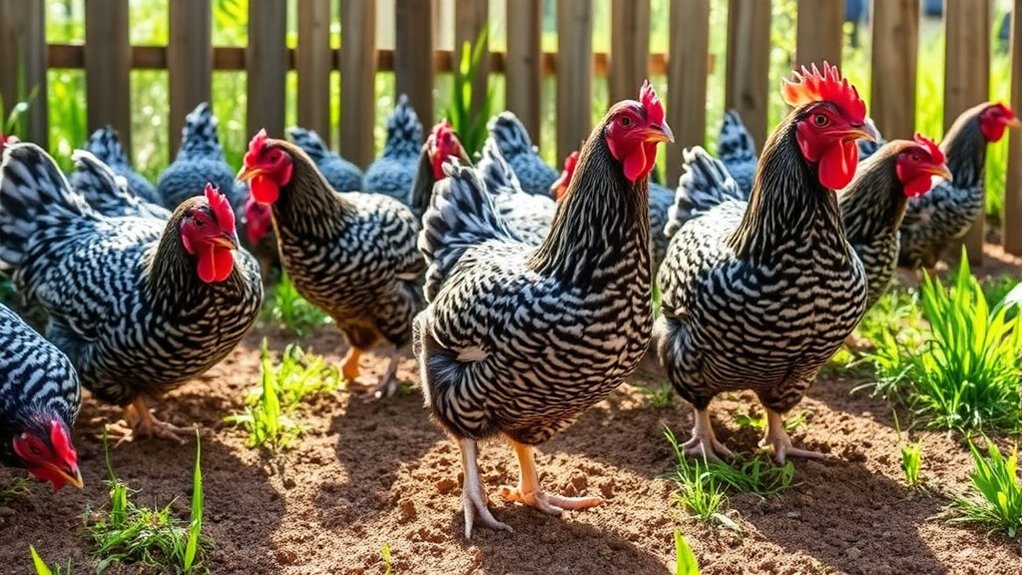
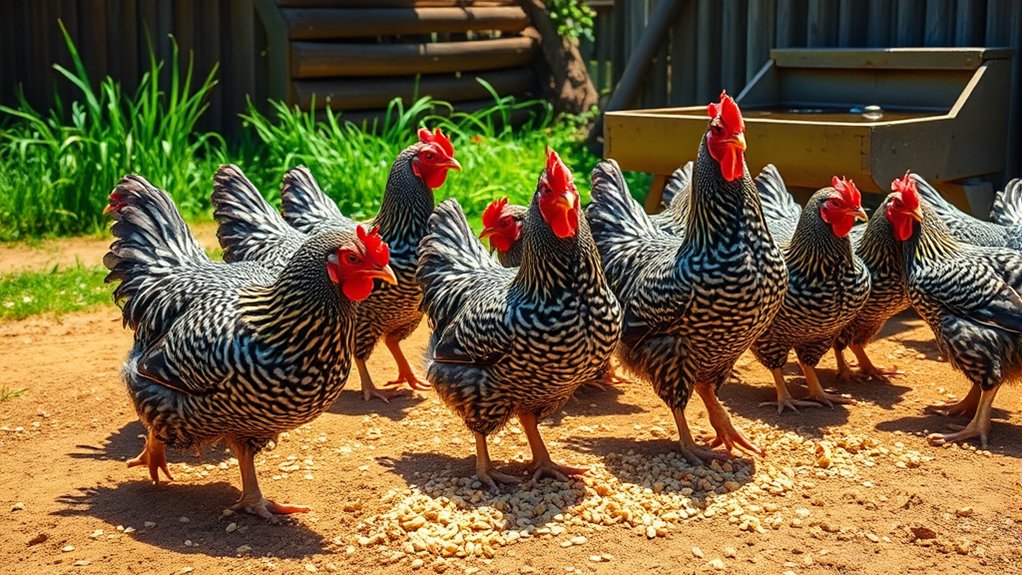
Barred Rock chickens are a great choice if you want a hardy, reliable breed that’s easy to manage. You’ll appreciate how quickly they adapt to different climates and how steadily they produce eggs, even when conditions aren’t ideal.
Their calm temperament traits make them easier for you to handle, whether you’re a beginner or you’ve kept chickens before. They usually get along well with other flock members, so you won’t spend as much time dealing with squabbles.
You also get strong breeding advantages because Barred Rocks often pass along good size, resilience, and dependable laying habits. If you want a bird that balances productivity with a friendly nature, this breed fits that goal well.
You can count on them for practical benefits without sacrificing manageability, which makes them a smart addition to your backyard flock.
Set Up a Safe Barred Rock Coop

Once you’ve chosen Barred Rocks for their hardiness and easygoing nature, the next step is giving them a coop that keeps them protected and comfortable. Build a dry, sturdy structure with solid flooring, tight walls, and predator-proof locks.
Add plenty of coop ventilation near the roof so fresh air moves through without creating drafts. Give each hen enough room to perch, stretch, and rest without crowding.
| Feature | Purpose | Tip |
|---|---|---|
| Ventilation | Reduces moisture | Place high openings |
| Nesting boxes | Supports egg laying | Use one per 3 hens |
| Secure doors | Blocks predators | Lock every night |
Line the floor with clean bedding and keep it easy to replace. Place nesting boxes in a quiet, dim corner so your hens feel secure when they lay. Check for sharp edges, gaps, and weak hardware before your flock moves in.
Prepare a Brooder for Barred Rock Chicks

Before your Barred Rock chicks arrive, set up a warm brooder that keeps them safe, dry, and easy to monitor. Use a sturdy box, tote, or pen with smooth sides, secure ventilation, and a solid floor lined with clean pine shavings. Avoid slick surfaces that can strain their legs.
Position a heat lamp or brooder plate so you can control brooder temperature and create a warm zone with a cooler edge. Start around 95°F, then lower it each week as the chicks feather out. Give them enough brooder space to move, rest, and stay away from waste.
Keep feeders, waterers, and bedding stable so nothing tips easily. Add a low edge or lid if pets or drafts are a concern. Check the setup daily for damp bedding, loose cords, and sharp edges. A calm, dry brooder helps your chicks settle quickly and grow strong.
Feed Barred Rock Chicks and Pullets
Start Barred Rock chicks on a high-quality chick starter feed with about 18% to 20% protein so they get the nutrients they need for fast, healthy growth. Let your chicks eat this starter feed freely during the day, and keep their feeding schedule consistent so they stay on track.
Good chick nutrition supports strong feathers, bones, and immune function, which helps them develop into sturdy pullets.
At about six weeks, you can switch to a grower feed with a slightly lower protein level, usually around 16% to 18%. This change helps you match their changing needs without overfeeding protein.
As your pullets mature, offer layer feed only when they’re old enough to start laying, since it provides more calcium for egg production.
You can also offer small amounts of healthy treats, but keep them under 10% of the diet. Avoid spoiling balanced nutrition with too many extras.
Keep Water, Light, and Bedding Clean
You should change your Barred Rocks’ water every day to make sure they always have a clean, fresh supply. It’s important to keep the coop bright and dry, too. And don’t forget to replace the bedding often—this helps cut down on odor and germs. When their surroundings are clean, your birds stay healthy and grow well.
Clean Water Daily
Fresh, clean water is essential for barred rock chickens, so check and refill their waterer every day. Scrub it often to prevent algae, droppings, and slime from building up. You can’t overstate hydration importance, especially in heat or during molt.
Offer multiple water sources if your flock ranges widely, and make each one easy to reach.
- Watch for cloudy water.
- Empty and rinse daily.
- Refill with fresh water.
- Keep drinkers shaded.
When you stay on top of water care, your birds stay brighter, drink more, and act more lively. Clean water supports steady egg laying, helps digestion, and keeps stress low.
Just a few minutes each day can make the difference between sluggish hens and a healthy, thriving flock.
Fresh Bedding Often
Clean water is only part of a healthy coop; fresh bedding matters just as much. You should replace dirty bedding often so your Barred Rocks stay dry, comfortable, and healthier. Wet or soiled litter can trap ammonia, invite pests, and raise disease risk.
Choose bedding materials like pine shavings, chopped straw, or hemp, and add more when the floor starts to cake or smell. Scrape droppings, fluff the surface, and keep nesting boxes tidy.
Good bedding benefits your flock by reducing odor, absorbing moisture, and giving hens a clean place to rest. In rainy weather, check the coop more often, because dampness builds fast.
When you keep bedding fresh, you protect your birds and make daily care easier too.
Protect Barred Rocks From Predators
You’ll keep your Barred Rocks safe by building a sturdy coop with tight locks and solid walls—make sure there are no gaps a predator can squeeze through. When they free-range, put up strong fencing and overhead protection, and keep an eye on them to cut down risks from hawks, dogs, and other threats. It also helps to regularly check for weak spots so you can fix problems before predators take advantage.
Secure Coop Design
A sturdy coop is one of the best ways to keep your Barred Rocks safe from predators. You should build with strong lumber, hardware cloth, and tight seams so raccoons and foxes can’t pry inside. Good coop ventilation keeps air fresh without leaving gaps predators can exploit, and secure nesting boxes give hens a calm place to lay.
- Lock every door with predator-proof latches.
- Cover vents and windows with hardware cloth.
- Reinforce floors and corners to stop digging or chewing.
- Inspect the coop nightly for weak spots.
When you design for strength first, you protect your flock and reduce stress. Your chickens will roost more calmly, and you’ll sleep better knowing they’re sheltered.
Predator-Proof Free Range
Even when Barred Rocks love to roam, free-ranging only works if you make the area as predator-resistant as possible. You can still enjoy the free range benefits by fencing the yard, covering open runs, and removing brush piles where foxes, hawks, and raccoons hide.
Let your birds out only when you’re nearby, and bring them in before dusk, when many predators hunt hardest. Use motion lights, guard animals, and secure feed storage to reduce attractants.
Rotate grazing spots so birds don’t linger near cover, and inspect gaps under fences, gates, and sheds often. These predator strategies help you protect your flock without shutting down outdoor access.
With smart planning, your Barred Rocks can scratch, forage, and stay safer every day.
Watch for Common Barred Rock Health Issues
Although Barred Rock chickens are hardy, you still need to watch for common health issues like mites, lice, respiratory infections, bumblefoot, and egg-laying problems. Check your flock often so common ailments don’t sneak up on you and cause stress or loss.
Barred Rock chickens are hardy, but watch closely for mites, lice, respiratory issues, bumblefoot, and egg-laying problems.
Keep bedding dry, inspect skin and feet, and isolate any bird that seems weak, wheezy, or off feed. Quick preventive measures can save you heartbreak and money.
- Look under wings for tiny pests.
- Watch for limping, swelling, or dirty feet.
- Listen for coughing, sneezing, or rattling breaths.
- Note pale combs, laziness, or sudden behavior changes.
If you catch signs early, you can treat minor problems before they spread. Clean coops, fresh water, and calm handling help your hens stay strong. When you stay alert, you protect their comfort and keep your flock thriving.
How to Boost Egg Laying in Barred Rocks
Healthy Barred Rocks usually lay better, so the same good care that keeps them free of mites, sickness, and stress also helps boost egg production. Give your hens a balanced layer feed with enough protein, calcium, and energy for daily laying.
Fresh water should always be available, since even a short shortage can slow production. Use egg production tips like offering oyster shell separately, keeping feed clean and dry, and collecting eggs often to encourage steady laying.
Protect the flock from extreme heat or cold with shade, ventilation, and draft-free shelter. You can also support them with nutritional supplements when their diet needs an extra boost, but don’t overdo it.
A regular light schedule helps too, so maintain about 14 to 16 hours of light during short winter days. Keep their routine consistent, and your Barred Rocks will usually reward you with more reliable eggs throughout the year.
Handle and Socialize Your Flock
Handle your Barred Rocks gently every day so they learn that you’re safe and dependable. Try speaking softly and moving slowly. You can even offer treats from your hand to help build trust.
With steady, calm contact like this, your flock will become easier to manage and more relaxed around you. It really makes a difference!
Gentle Daily Handling
Gentle daily handling helps your Barred Rock chicks grow into calm, confident hens that trust people. Use gentle interactions from the start: speak softly, move slowly, and let each chick see your hands before you touch her. Offer positive reinforcement with a calm voice and a tiny treat after you pick her up, so she links you with comfort. Keep sessions brief and consistent.
- Scoop her securely under the chest.
- Support her feet so she feels safe.
- Stroke her back lightly, then set her down.
- End on a relaxed note before she fusses.
When you handle your flock every day, you build their comfort and your own confidence. Soon, they’ll settle into your hands instead of flinching away.
Build Flock Trust
To build flock trust, keep showing up in calm, predictable ways so your Barred Rocks learn that you’re safe to be around. Offer treats by hand, speak softly, and move slowly so they can approach on their own terms.
When you sit near them each day, you support flock bonding and show them that handling doesn’t mean stress. Pick up only one bird at a time, support its body well, and set it down before it gets restless.
Short, positive sessions help with trust building far more than forced contact. Over time, your chickens will relax, follow you, and accept routine care with less fuss.
Keep interactions steady, gentle, and brief, and your flock will grow confident around you.
Care for Barred Rocks Through Winter
As temperatures drop, keep your Barred Rocks dry, draft-free, and well-fed so they can stay warm and healthy through winter. Add shelter insulation around the coop, but leave ventilation high to prevent damp air from lingering.
Offer winter nutrition with extra calories, such as whole grains, scratch in moderation, and protein-rich treats, so your hens can keep body heat steady. Check water often; you don’t want ice to cut off hydration.
- Refresh bedding so feet stay dry and frostbite risk drops.
- Lock out drafts, especially near roosts, where cold bites hardest.
- Break ice twice daily, because thirsty birds lose condition fast.
- Watch combs and behavior; bright, alert hens show they’re coping well.
If snow piles up, clear a safe run and let them scratch for joy. You’ll help your flock face winter with resilience, comfort, and fewer stress-related setbacks.
Frequently Asked Questions
How Can You Tell a Barred Rock Hen From a Rooster?
You can tell a barred rock hen from a rooster by looking at size, comb, wattles, and barring. Roosters usually grow larger, stand taller, and develop bigger red combs and wattles earlier. Their feathers often look lighter because their barring is wider.
Rooster behavior also helps; he’ll crow, strut, and guard the flock. Hens stay smaller, quieter, and rounder. Watch these Barred Rock characteristics closely as they mature.
At What Age Do Barred Rock Chicks Start Crowing?
Barred Rock chicks usually start crowing around 4 to 6 months old, though you’ll sometimes hear an awkward little attempt earlier. During chick development, roosters grow louder, bolder, and more confident as their crowing behavior kicks in.
You can’t miss it; it’s like a tiny feathered trumpet announcing itself at dawn! If your chick starts practicing squeaky crow sounds, you’re probably hearing a young cockerel finding his voice.
Do Barred Rocks Get Along With Other Chicken Breeds?
Yes, barred rocks usually get along well with other chicken breeds when you introduce them slowly and watch their social behavior. You’ll get the best flock dynamics if you give everyone enough space, multiple feeders, and places to escape.
They’re generally calm, friendly birds, so they often fit into mixed flocks nicely. Still, you should monitor bullying, especially during pecking order changes or when new birds join the coop.
Can Barred Rocks Be Free-Ranged Safely Every Day?
Yes, if you plan carefully, you can let them free-range daily. Studies show free-ranging birds can eat up to 25% of their diet from forage, which boosts the free-ranging benefits.
You’ll still need predator precautions like secure fencing, supervised outings, and a locked coop at dusk. Barred Rocks are alert and hardy, but they’re not invincible.
Keep an eye on hawks, dogs, and raccoons, especially in open yards.
How Long Do Barred Rock Chickens Usually Live?
Barred Rock chickens usually live about 5 to 8 years, though you can sometimes keep them healthy for 10 years or more with excellent care. Their average lifespan depends on genetics, diet, predators, and health care.
If you give them clean water, balanced feed, space to move, and regular checks for illness, you’ll help them live longer and lay well. Proper protection from stress and predators also makes a big difference.
Conclusion
Raising Barred Rock chickens isn’t just rewarding, it’s downright egg-citing. If you give them a safe coop, a cozy brooder, clean feed and water, and a little daily attention, they’ll repay you with friendly clucks and a mountain of eggs that can feel almost magical.
Keep an eye on their health, handle them gently, and help them through winter. You’ll have a flock that’s happy, hardy, and practically impossible not to love. With some care, raising Barred Rock chickens can become one of your favorite hobbies.