5 Silkie Chicken Care Tips for Beginners
If you’re new to raising Silkie chickens, you’re not alone in feeling a bit overwhelmed. Many beginners struggle with knowing exactly how to care for these unique birds to keep them healthy and happy.
Whether it’s creating the right environment or feeding them properly, getting started can feel like a lot.
To care for Silkies as a beginner, start with a dry, secure coop on higher ground, with low roosts, ventilation, and predator-proof wiring. Silkie Chicken Care.
Feed chicks about 20% protein crumble, then move to grower and layer feed as they mature. Keep water fresh and bedding clean, and give them dry dust-bathing space.
Protect them from cold, wet weather with a sheltered run. Handle them gently every day, and you’ll pick up more useful care tips soon.
Key Takeaways
- Set up a dry, draft-free coop with secure latches, buried wire, and raised roosts. This keeps your Silkies safe and comfortable.
- Feed chicks about 20% protein crumble at first. Then switch to grower feed, and later move on to layer feed as they mature.
- Always keep fresh water available. Check their body condition weekly so you can adjust portions as needed.
- Keep Silkies clean and dry with fresh bedding and dust baths. Give them gentle cleaning only when necessary.
- Handle them slowly and gently every day. This helps build trust and reduces their stress.
Set Up a Safe Silkie Coop

Before you bring home your Silkie chickens, set up a coop that keeps them safe, dry, and comfortable. You need a dry floor, sturdy walls, and raised roosts that stay low enough for their fluffy bodies.
Add coop ventilation near the roof so fresh air moves out moisture without creating drafts at ground level. Use solid latches, buried wire, and covered windows as predator deterrents since foxes, raccoons, and dogs can pry or dig their way in.
Add roof-level ventilation to release moisture while keeping drafts low. Use sturdy latches, buried wire, and covered windows to block predators.
Keep the run fenced with fine mesh, and check for gaps each week. Provide easy access for cleaning because damp bedding can quickly lead to problems.
Place the coop on slightly higher ground so rain doesn’t pool inside, and make sure the door closes tightly every time. When you build for comfort and security first, your Silkies can settle in calmly and thrive.
Feed Silkie Chickens for Healthy Growth
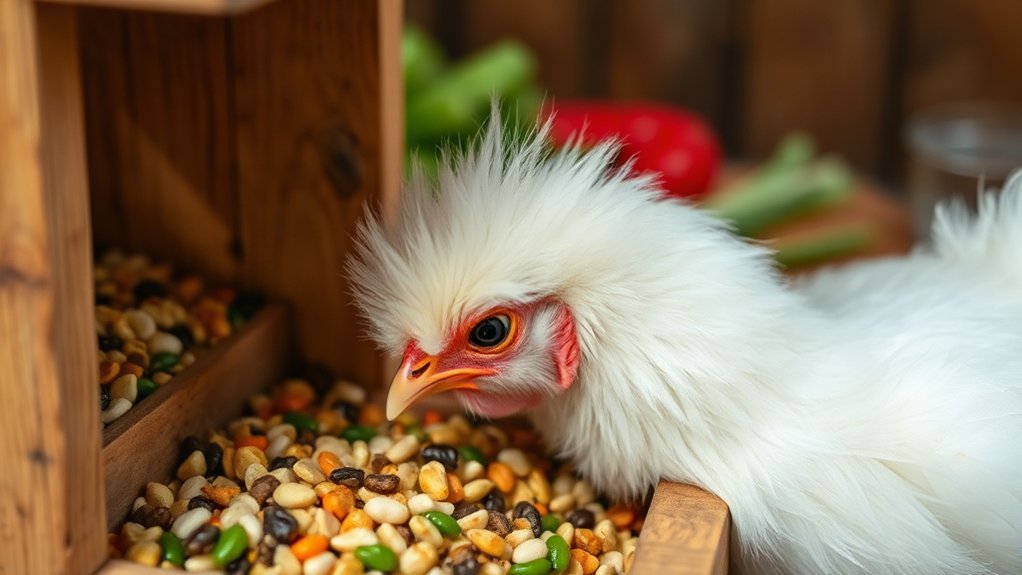
Feed Silkie chickens a balanced ration made for poultry so they get the protein, vitamins, and minerals they need for steady growth. You should choose a starter feed for chicks and a grower or layer feed as they mature, since their nutritional needs change with age. Keep fresh water available at all times, and offer treats only in small amounts so they don’t unbalance the diet. A steady feeding schedule helps you monitor appetite and catch problems early.
- Feed chicks a crumble with about 20% protein.
- Switch to a lower-protein grower feed as they feather out.
- Give layer feed when pullets begin laying.
You can add small amounts of leafy greens, oats, or mealworms, but pellets or crumble should stay the main food. Watch body condition weekly so you can adjust portions before your Silkies become too thin or overweight.
Keep Silkies Clean and Dry
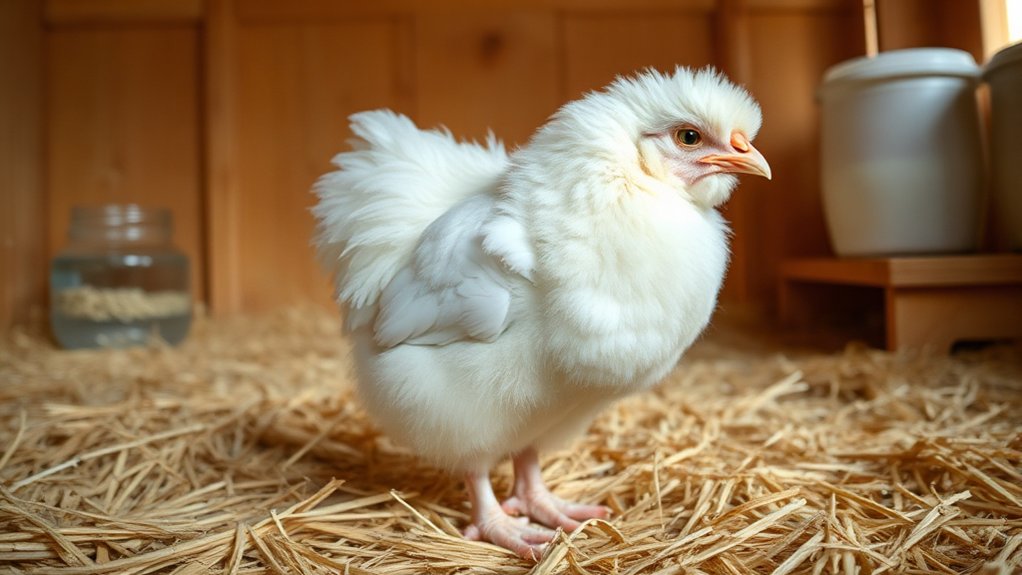
Clean, dry bedding helps Silkies stay healthy because their fluffy feathers can trap moisture and dirt. You should replace soiled litter often, rake out damp spots, and keep the coop tidy so mud and droppings don’t cling to their plumage.
Clean, dry bedding keeps Silkies healthy by preventing moisture, mud, and droppings from clinging to their fluffy feathers.
When your birds get messy, use gentle bathing techniques only when needed, such as a shallow tub of warm water and mild poultry-safe shampoo. Rinse well, then towel them off carefully so you don’t mat the feathers.
Afterward, let them dry fully in a warm, draft-free space before returning them to the flock. Good feather maintenance also means checking around the feet, face, and vent for buildup. Trim caked debris with care if you can’t wash it away.
Give Silkies dust-bathing space with dry sand or soil, since that helps them stay clean naturally. By keeping their environment neat and their feathers light, you’ll make daily care easier and keep your flock looking its best.
Protect Silkies From Cold, Wet Weather
When cold, wet weather rolls in, Silkies need extra protection because their fluffy feathers don’t shed moisture well. You should keep them in a draft-free coop with dry bedding and check for leaks after every storm. Add safe heat sources only if temperatures drop sharply, and use them carefully to avoid fire risk.
Good insulation methods help hold warmth without trapping damp air, so seal gaps and raise roosts off the floor.
- Use deep, dry litter to buffer cold ground and absorb moisture.
- Block wind with tarps, panels, or tight coop walls.
- Offer a sheltered run with a roof so your birds can stay outside safely.
You should also refresh wet bedding fast since damp conditions chill Silkies quickly. Provide fresh water that won’t freeze, and let them return indoors whenever rain or sleet starts.
Handle Silkie Chickens Gently Every Day
Once your Silkies are safe from the weather, make handling part of your daily routine so they stay calm and trusting. You should approach slowly, speak softly, and let each bird see your hands before you lift it. Support the chest and feet with both hands, and keep the chicken close to your body so it feels secure. Short, gentle sessions work best, especially when you first start.
Use handling tips like offering treats after every interaction and ending sessions before your bird gets restless. These bonding techniques teach your Silkies that you’re predictable and safe. Handle them every day, even if it’s only for a few minutes, so they stay used to your touch. If a chicken flaps or squirms, stay calm and lower it carefully. Consistency matters more than force, and patience will help you build trust quickly.
Frequently Asked Questions
How Often Should Silkies Be Wormed?
You should worm your Silkies based on risk, not a fixed calendar. If you see signs of worms, test and treat right away. Otherwise, many keepers follow worming schedule recommendations every 3 to 6 months.
You can also support flock health with natural deworming methods like clean bedding, rotated runs, and good sanitation. Always check droppings and consult a poultry vet if you’re unsure about dosage or resistance.
Do Silkies Need Special Nesting Boxes?
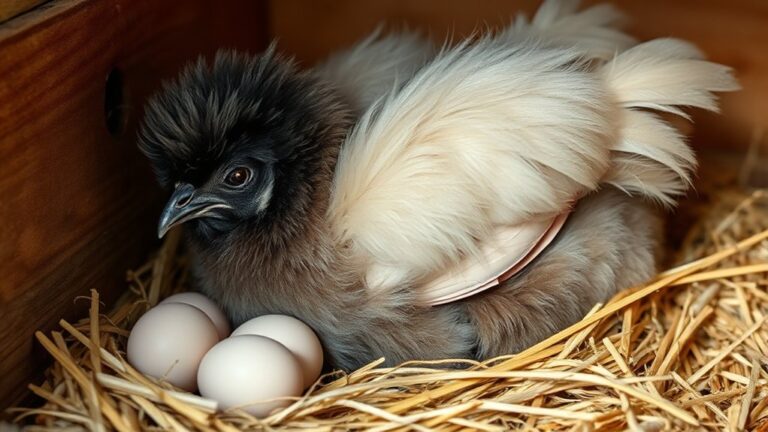
Yes, you should give them special nesting boxes. Think of a plush hotel suite for tiny feathered royalty. You don’t need anything fancy, but you do want a low, roomy box with soft nesting materials and easy access.
Silkies often have nesting preferences for cozy, secure spaces, so keep the entrance low and the interior dry. That way, you’ll help them settle, lay comfortably, and avoid unnecessary flop-and-climb drama.
Can Silkies Free-Range Safely With Dogs?
You can let silkies free-range with dogs, but only if you’ve trained the dogs well and supervise closely. Their fluffy feathers and small size make them vulnerable, so free range safety depends on your dog’s temperament, recall, and prey drive.
Start with leashed introductions, reward calm behavior, and keep an escape route available. Even friendly dogs can chase, so strong dog training and constant monitoring matter every day.
What Health Signs Mean a Silkie Is Sick?
You can tell your silkie’s sick when you see symptoms like droopy wings, fluffed feathers, pale comb, runny eyes, coughing, or messy droppings. You’ll also notice changes in her behavior: she may stop eating, hide, sleep more, or move slowly.
Check her crop, breathing, and balance too. If she seems weak, isolated, or can’t stand well, act fast and call a poultry vet for help.
When Do Silkies Start Laying Eggs?
Silkies usually start laying eggs around 7 to 9 months old, though some don’t begin until 10 months or later. You’ll see egg production pick up once your pullet reaches silkie maturity and stays healthy, well-fed, and stress-free.
Don’t expect huge numbers, though; Silkies often lay fewer eggs than other breeds. Give her a balanced diet, steady light, and patience, and she’ll usually settle into a regular laying rhythm.
Conclusion
Caring for silkies gets easier when you keep their coop safe, feed them well, and make sure they stay clean and dry. If you protect them from cold, wet weather and handle them gently every day, they’ll stay happy and healthy.
Think of your flock like tiny feathery royalty in a medieval castle, and you’ll remember to give them the comfort they need. With a little routine, you’ll help your silkies thrive for years.
By following these simple steps, your Silkie chicken care will become second nature, and your flock will flourish beautifully.