How to Stop a Broody Hen
If you’ve ever dealt with a broody hen, you know how challenging it can be to get her out of that nesting mode. You’re not alone—many people struggle with finding the right way to stop a broody hen without causing stress.
Whether you want your hen back to her usual self or just need to keep your flock productive, understanding the best approach is key.
To stop a broody hen, you need to break the nesting pattern fast. Remove soft bedding and other cozy cues, limit her access to the nest box, and, if needed, place her in a broody breaker cage or a cooler, brighter spot.
Keep food and water close so she can eat and drink easily.
Watch for normal scratching, preening, and calmer behavior, which show she’s improving. A few simple steps can make all the difference.
Key Takeaways
- Remove soft bedding and make nesting areas less cozy, dark, and inviting.
- Limit access to the nest box during the day or use a broody breaker cage.
- Move the hen to a cooler, brighter, well-ventilated area to encourage activity.
- Keep food and fresh water close so she continues eating and drinking normally.
- Watch for improvement, and contact a vet if broodiness lasts over three weeks or she seems ill.
What Triggers Broodiness in Hens?
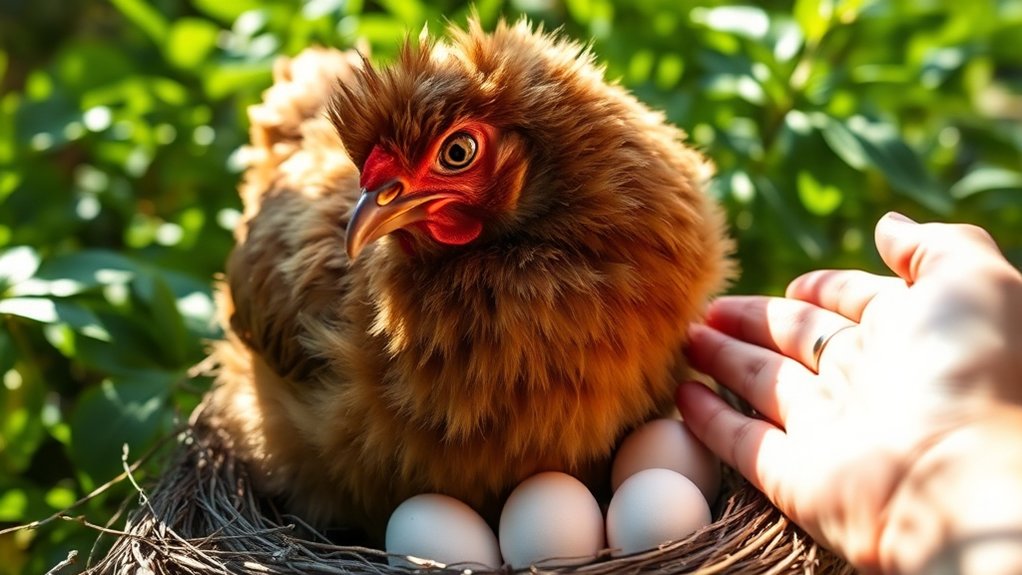
Broodiness in hens usually kicks in when hormones, instinct, and environmental cues line up. You’ll often see it after longer daylight, warm weather, or a quiet coop that feels safe for nesting.
Your hen’s breed can matter too, because genetic factors shape how strongly she responds to these seasonal signals. Some hens inherit a stronger drive to sit, warm, and protect eggs, while others barely show interest.
Environmental influences also play a big role. A snug nest box, frequent access to one spot, and the presence of eggs can reinforce the urge. When your flock has fewer distractions, a hen may settle into a nest and stay there longer.
Stress can contribute as well, since a calm, stable setting can make brooding more likely. Even if you don’t have fertile eggs, her body can still act as if she’s ready to hatch a clutch.
How to Spot a Broody Hen Early?
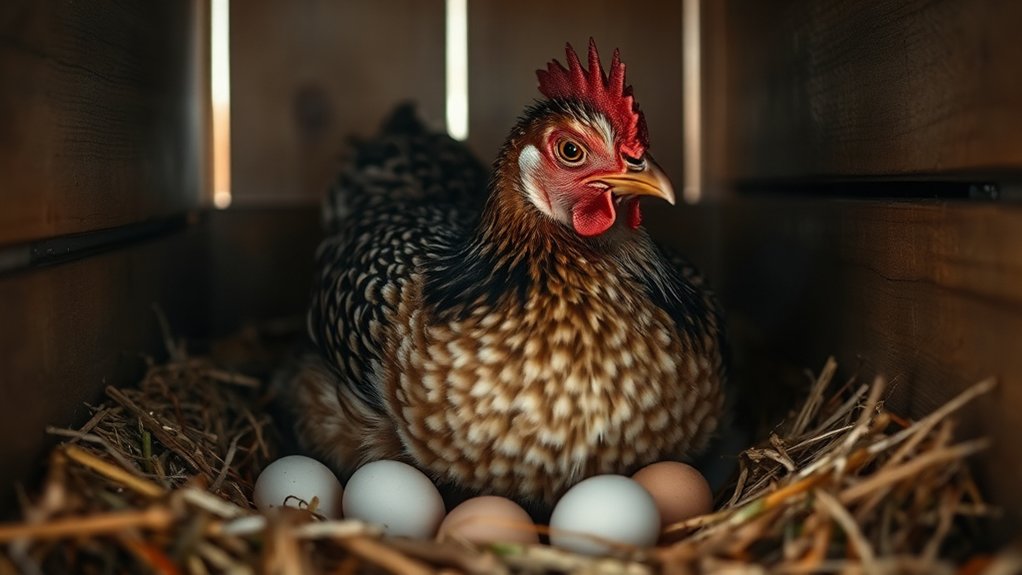
You can often spot a broody hen early when her behavior starts to change. For example, she might get stubborn, less active, or unusually protective.
She may also change her nesting habits—staying in the box longer than usual and even collecting extra bedding or eggs.
Keep an eye out for clingy body language too. She might puff up, crouch low, and stick close to the nest more than you’d expect.
Early Behavior Changes
Before a hen fully commits to brooding, she usually starts acting a little out of character. She may linger in the nest box longer than usual, puff up when you approach, or grow agitated when you try to collect eggs. These early signs and behavioral cues help you catch the change before it deepens.
Watch for | What You’ll See | What It Means |
| — | — | — |
|---|---|---|
| Irritability | Clucks sharply | She’s guarding space |
| Flat posture | Stays low and still | She’s settling in |
| Food fussiness | Leaves less often | Her focus is shifting |
When you notice these patterns, don’t ignore them. You can interrupt the routine, move her, and limit access to the nest area before brooding takes hold.
Nesting Habit Shifts
One of the clearest early signs is a shift in where and how often she nests. You may notice she skips her usual laying spot and starts choosing quiet corners, hidden boxes, or the same nest repeatedly.
Her nesting preferences can change fast, and she may linger in the box longer than usual without laying. She might also collect extra bedding or return to the nest after you’ve removed eggs.
Pay attention to seasonal changes, too, because broody behavior often appears when daylight and temperatures shift. If you see these habits building, you can act early by collecting eggs promptly, limiting comfortable nest access, and checking whether she’s spending more time settling in than laying.
These changes often show up before she fully commits to broodiness.
Clingy Body Language
A broody hen often gets unusually clingy, following you around the coop or yard and seeming more defensive of her favorite spot. You may notice she lowers her body posture, fluffs up, and freezes when you approach, as if guarding a nest that isn’t fully hers yet.
She might press against you, peck lightly, or block access to nesting boxes. Her vocal signals often change too; expect soft clucks, growls, or irritated chatter when you move her.
These early signs matter because they show she’s shifting into nesting mode before she commits fully. If you spot this clingy behavior, act quickly: reduce nesting access, collect eggs often, and disrupt the routine that’s encouraging broodiness.
Stop Nesting Cues Immediately

Remove anything that makes her think nesting is still an option, because even small cues can keep broodiness going. You need to interrupt her nesting instincts fast by changing the sights, smells, and textures around her.
When you leave soft bedding, hidden corners, or familiar fluff in place, her behavioral cues stay strong and she settles back into mother mode. Replace cozy materials with plain, clean surfaces that don’t invite settling.
- Clear out extra straw, feathers, and debris
- Remove dark, quiet clutter near her favorite spots
- Shift anything warm, soft, or inviting from her reach
Keep the area simple and unappealing so she can’t lock onto the same pattern again. Don’t add anything that suggests a safe place to sit for long periods.
The less nest-like her environment feels, the faster her hormones can settle down. Stay consistent, because mixed signals will only prolong the urge to brood.
Limit Access to the Nest Box
Once you’ve stripped away the cozy cues, the next step is to make the nest box less available. You can start by blocking off the box during parts of the day, especially when she keeps returning to sit. If you have several hens, rotate access so she can’t claim the same spot for long.
Use nest box restrictions that limit how often she can enter, then open the area only when you collect eggs quickly. Remove any extra bedding that makes the box feel inviting, and keep the space bright and active.
You can also place nesting deterrents nearby, such as temporary barriers or an inconvenient layout that interrupts her routine. The goal isn’t to punish her; it’s to break the habit of settling in.
When you make the box harder to reach and less comfortable to use, you reduce the chances that she’ll stay focused on brooding and start moving around again.
Use a Broody Breaker Cage
If she still won’t quit brooding, a broody breaker cage can help reset her behavior. You place her in a wire-bottom cage or crate that lets air circulate underneath and keeps her from settling into a nest. This interrupts broody behavior by making egg sitting uncomfortable without harming her.
Choose a cage design that’s roomy enough for standing, turning, and stretching, but not so cozy that she can curl up and brood again. Set food and water inside, and check her often for stress, dehydration, or injury.
Use a raised floor for airflow. Keep bedding minimal or absent. Return her only after she calms down.
Leave her there for a few days, then reassess. If she starts pacing, eating, and acting normally, you can move her back to the flock.
Move Her to a Cooler, Brighter Spot
Move her to a cooler spot in the coop so she won’t have the warmth and comfort that keep her broody. Try placing her somewhere she gets more light during the day, because brighter conditions can help shift her focus away from nesting.
A cooler, brighter setup can really make it easier to break the broody cycle. It’s all about changing her environment just enough to encourage her to move on.
Cooler Coop Placement
A cooler, brighter coop can help break a hen’s broody spell by making the nest feel less cozy and inviting. You should move her to a spot with better coop ventilation and steady temperature control so the space feels less like a nesting hideaway. Keep the area airy, dry, and comfortable, but not drafty or harsh. When you reduce heat buildup, she often gets up more and settles less.
Place her away from warm, quiet corners. Check airflow near walls, doors, and windows. Keep bedding light and less insulated.
You don’t need to stress her; you just want to make staying on the nest less appealing. A simple coop shift can support the rest of your plan without adding extra handling or fuss.
Increase Light Exposure
Brighter light can make the coop feel less like a cozy nest and more like a place to get up and move around. Move her to a brighter, cooler spot where daylight reaches her longer each day.
You can also extend light duration with artificial lighting if natural light is limited, but keep the change gradual so she doesn’t get stressed. Aim for a steady routine that gives her more active hours and less time to settle in and brood.
Make sure the area still offers food, water, and enough space to roam. If she can’t stay dark and tucked away, she’s more likely to break the broodiness cycle and return to normal hen behavior sooner.
Keep Food and Water Close By
Place your hen’s food and water within easy reach so she doesn’t have to leave the nest for long. When you keep supplies nearby, you reduce stress and make it easier for her to eat and drink without abandoning her routine.
Offer a balanced feed with some food variety, such as layer pellets, grains, and a few greens, so she stays interested enough to take quick breaks. Don’t forget hydration importance; fresh water should always sit close to the nesting area, especially in warm weather.
Use shallow, clean containers so she can access them safely and quickly.
- Refresh water at least once daily.
- Position feed and water a few steps from the nest.
- Check that bowls stay clean and easy to reach.
These small adjustments help you support her needs while gently encouraging her to move around more often.
See if She’s Over It
Watch for signs that her broodiness is fading, such as spending more time off the nest, clucking less, or showing interest in food and water again. You may also notice she’s calmer when you approach and less fixed on her nesting spot.
These changes suggest her broody behaviors are easing and she’s ready to rejoin the flock. Check her body condition too.
A hen that’s eating well, drinking normally, and moving around more usually has better hen health than one that stays puffed up and withdrawn. Handle her briefly and calmly so you can observe her response without stressing her.
If she leaves the nest willingly and resumes normal scratching, preening, and dust bathing, she’s likely over it. Keep watching for a few days, since some hens waver before settling fully.
When her routine looks steady, you can feel confident her broody phase is ending.
Prevent Broodiness From Returning
Once she’s back to normal, keep her busy and comfortable so broodiness doesn’t return. Give her steady light, fresh feed, clean water, and enough space to roam and scratch. When you collect eggs often, you reduce triggers that can restart nesting behavior and interrupt egg production.
You can also use behavioral modification by changing her routine in small ways, like moving the flock to a different run or offering new foraging spots. Watch for signs that she’s lingering in nests again, and redirect her right away.
Keep nesting boxes clean, dry, and less inviting. Add enrichment such as treats, dust baths, and safe perches. Maintain a consistent schedule so she feels settled, not fixated.
If you stay consistent, she’ll be less likely to slip back into broodiness. Support her body with proper nutrition, and let her spend more time with the flock so her attention stays on normal hen activity.
When Does a Broody Hen Need Help?
Even with the right care, a broody hen may need extra help if she stops eating or drinking, loses weight, becomes weak, or stays broody for weeks on end. Watch her closely because broody behavior can mask illness and quickly affect hen health. If she won’t leave the nest, check her crop, comb, and droppings, and make sure she’s passing normal manure.
| Warning sign | What you should do |
|---|---|
| Little interest in food or water | Offer fresh feed and water nearby |
| Weight loss or weakness | Separate her and assess hen health |
| Broodiness beyond 3 weeks | Break the cycle and call a vet |
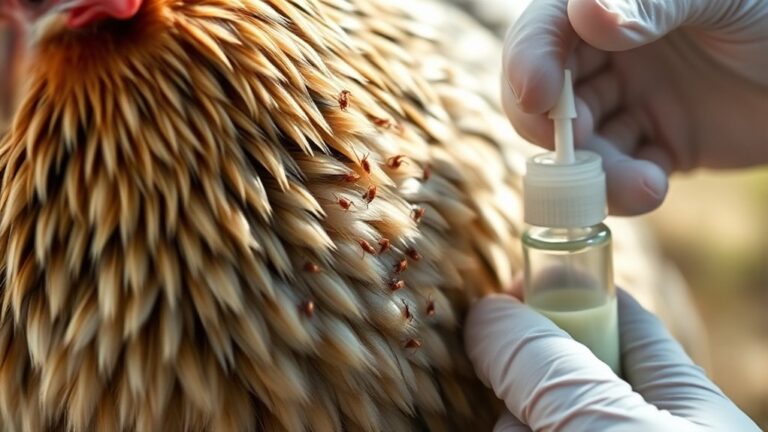
You should also get help if she pants, limps, or seems injured. A veterinarian can rule out parasites, egg binding, or infection. Acting early keeps a small problem from becoming a serious setback and helps you restore normal behavior safely.
Frequently Asked Questions
Can Broody Hens Still Lay Eggs While Broody?
Yes, a broody hen can still lay an egg now and then, but her egg production usually drops a lot during broody behavior. You’ll often notice she spends most of her time nesting, eating less, and refusing to leave the nest.
That means she may pause laying entirely for days or weeks. If you want steady eggs, you’ll need to break the broodiness and get her back to normal laying routines.
How Long Does Broodiness Usually Last?
Broodiness usually lasts about 21 days, but you might see broody behavior for a few days longer or shorter. If you leave your hen with eggs, she’ll often stay committed until the hatch window closes.
Broody triggers like warm nesting spots, leftover eggs, and a strong laying cycle can extend it. You can expect her mood to shift once her hormones settle and she starts leaving the nest more often.
Is Broodiness Harmful to the Hen’s Health?
Usually, no, but you shouldn’t let it drag on. Broody behavior can affect your hen health if she stops eating, drinking, or leaving the nest for too long.
You may notice weight loss, dehydration, or dirty feathers. Keep an eye out for trouble signs, because a stitch in time saves nine.
If she seems weak, isolate her and offer food, water, and rest right away.
Will a Broody Hen Stop Eating and Drinking?
Yes, she can eat and drink much less when broody behavior takes over, but she usually won’t stop completely. You’ll notice her sitting tight, leaving the nest rarely, and losing interest in food and water.
Good hen care means you should check that she’s drinking enough and pecking at feed daily. If she seems weak, dehydrated, or loses weight, you’ll need to intervene and encourage her to move more.
Can Other Hens Become Broody From Watching Her?
Yes, you can sometimes see other hens copy broody behaviors, especially if they’re close companions. Chickens often respond to social influences, so one hen’s nesting, clucking, and staying put can nudge others to act likewise.
It doesn’t guarantee they’ll all go broody, but it can raise the odds. You should watch your flock closely and separate any hen that starts sitting tight for too long.
Conclusion
Stopping a broody hen works best when you act fast and stay consistent. You’ve probably heard that broodiness “just passes,” and that’s partly true, but only if you interrupt the cycle early.
Remove nesting cues, limit box access, and use a broody breaker cage if needed. Keep food and water nearby, then watch for signs she’s returning to normal.
If she won’t recover or seems weak, it’s time to get help. Remember, knowing how to stop a broody hen can save her health and keep your flock happy.