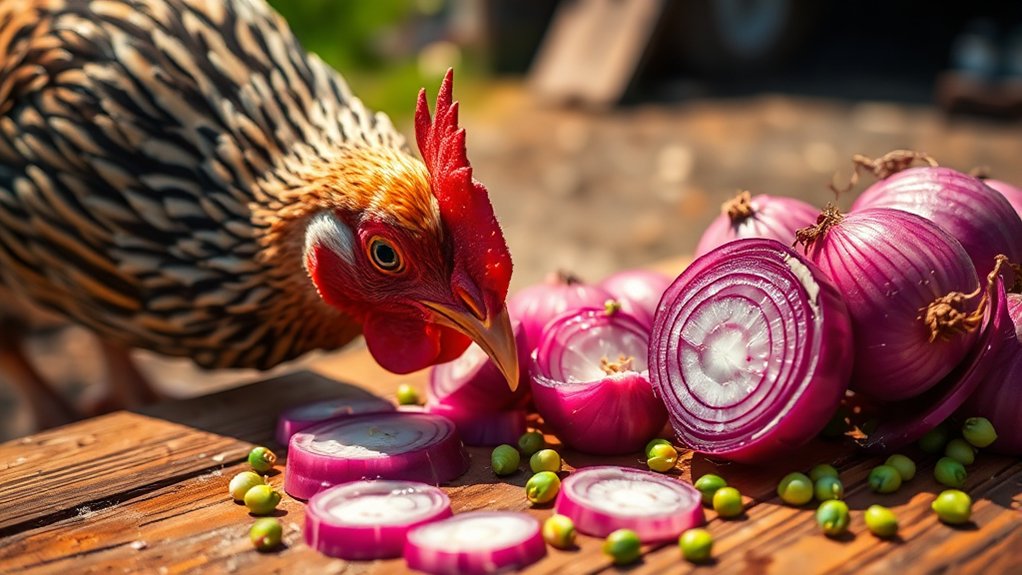
Can Chickens Eat Onions?
If you’re raising chickens, you probably want to keep them happy and healthy without second-guessing what to feed them. But figuring out which foods are safe can be tricky, and you’re not alone if you’ve wondered, “Can chickens eat onions?” Many people struggle with this because it’s hard to find clear, reliable advice.
No, you shouldn’t feed chickens onions. Even small amounts can upset their digestive system, and larger amounts may damage red blood cells, causing weakness, pale combs, tiredness, and lower egg production.
Avoid giving any part of the onion, including bulbs, skins, tops, or green shoots, whether raw or cooked. Instead, offer leafy greens, cucumber, cooked grains, and other safe treats.
If you want to keep your flock healthy, there’s more you should know.
Key Takeaways
- Chickens should not eat onions regularly because onion compounds can damage red blood cells.
- All onion parts are unsafe, including bulbs, peels, tops, and green shoots.
- Onion toxicity can cause weakness, pale combs, lethargy, and reduced egg production.
- Small accidental amounts may happen, but overconsumption can lead to anemia and digestive upset.
- Safer treats include leafy greens, cucumber, cooked grains, and other balanced foods.
Can Chickens Eat Onions Safely?

Can chickens eat onions safely? You shouldn’t treat onions as a regular snack for your flock. When you manage chicken dietary restrictions, you need to choose foods that support steady health and egg production. Onions don’t fit that goal, so keep them out of daily treats and feed mixes.
If you’ve already offered a small amount, watch your birds closely for onion toxicity symptoms such as weakness, pale combs, reduced appetite, or unusual droppings. Those signs mean you should stop giving onions and contact a poultry veterinarian for guidance.
Instead, you can offer safer scraps like leafy greens, cucumber, or cooked grains in moderation. Your chickens do best with a balanced layer feed, clean water, and occasional approved treats. By staying cautious, you’ll protect their health and avoid unnecessary risks from foods that don’t belong in their diet.
Why Onions Are Harmful to Chickens

Onions are harmful to chickens because they contain compounds that can damage red blood cells and trigger anemia over time. When you feed onions, you increase the chance of oxidative stress, which makes it harder for your birds to carry oxygen efficiently.
That can leave them weak, tired, and less able to eat, move, or lay normally. You might also notice onion toxicity symptoms like pale combs, reduced appetite, droopy behavior, and decreased egg production.
These chicken health risks don’t always show up right away, so even repeated small servings can add up and strain your flock’s system.
If you want healthy birds, you should keep onions out of their diet. Chickens do best with safe grains, greens, and balanced feed instead of foods that interfere with blood health.
The danger comes from the way onions affect their bodies, not from flavor alone, so caution matters every time you offer scraps.
Which Parts of Onions Are Unsafe?

You should keep all parts of the onion away from your chickens—this includes the bulbs, layers, tops, and green shoots. Even the peels and scraps can still have harmful compounds, so it’s best not to treat any piece of onion as safe. If you’re feeding leftovers, just skip onions altogether and go for a chicken-safe option instead.
Onion Bulbs and Layers
A single onion bulb can pose the same problem as a handful of slices, because the fleshy layers and the outer skin both contain compounds that can harm chickens if they eat too much. You should treat every bulb as unsafe, whether it comes from mild onion varieties or sharper ones used in onion recipes.
The layers hold sulfur compounds that can irritate your bird’s digestive system and, in larger amounts, contribute to blood damage. If you’re preparing food, keep raw or cooked bulbs out of the coop and don’t toss scraps into the run.
Even small bites add up when chickens peck repeatedly. Instead, feed safe kitchen scraps and keep onions for your own meals only. That simple habit helps protect your flock from avoidable illness and stress.
Tops and Green Shoots
The leafy tops and green shoots of onions aren’t safe for chickens either, since they contain the same troublesome sulfur compounds found in the bulb. You should treat these parts as off-limits, even if they look mild or fresh.
Different onion varieties may have slightly different flavors, but that doesn’t make their greens safer. Your flock’s chicken preferences can vary, yet taste isn’t a reliable guide here.
- Don’t toss kitchen trimmings with onion greens into the run.
- Keep garden beds fenced if onions are sprouting nearby.
- Remove accidental shoots before offering any plant matter.
If you want to protect your birds, skip all onion tops and choose safer herbs or vegetables instead.
Onion Peels and Scraps
Even onion peels and leftover scraps can pose a risk to chickens, because the harmful sulfur compounds don’t stay neatly limited to the bulb. You might hear claims about onion peel benefits, but you shouldn’t rely on them for your flock.
Peels, papery layers, trimmings, and spoiled kitchen scraps can still trigger chicken health risks, especially if your birds peck at larger amounts or you feed onions often. If you compost onion waste, keep chickens away from it.
Don’t toss mixed leftovers into their run, since bits of onion can hide in food waste and tempt curious birds. Stick with safer treats, and treat onions as an ingredient to avoid, not a poultry snack. Your chickens’ digestion and blood health are too important for guesswork.
What Happens If Chickens Eat Too Many Onions?
If your chickens eat too many onions, they might run into some problems like anemia and digestive upset. It’s because onions can be a bit toxic to them when consumed in large amounts.
You’ll want to keep an eye out for signs of onion toxicity, like weakness, pale combs, a drop in their appetite, or just overall lethargy. These symptoms can indicate that the onions are affecting their health.
To stay on the safe side, it’s best to limit how much onion you feed them—if you give them any at all. Small amounts here and there are usually okay, but too much can definitely cause trouble.
Onion Overconsumption Risks
Too many onions can upset a chicken’s digestive system and, in larger amounts, lead to more serious health problems. You should treat onions as an occasional nibble, not a feed staple, because excess can strain chicken digestive health and reduce appetite.
If you keep offering onions, you may also increase the risk of onion toxicity symptoms, especially when your birds eat raw scraps often.
- Limit onion treats to tiny pieces.
- Mix treats with safer foods like greens.
- Watch your flock’s eating habits closely.
When you keep portions small, you help protect their energy, digestion, and overall condition. If onions become a regular part of the diet, you’re taking an avoidable risk that can interfere with normal nutrient intake and day-to-day flock wellness.
Signs Of Onion Toxicity
When chickens eat too many onions, you may notice digestive upset first, followed by more serious toxicity signs like weakness, pale combs, reduced appetite, and droopy behavior. You might also see onion sensitivity symptoms such as watery droppings, gas, or sudden lethargy.
Watch closely for chicken digestive issues that don’t pass quickly, because onions can irritate the gut and stress your birds.
| Sign | What you may see |
|---|---|
| Mild upset | Loose droppings, gurgling, less interest in feed |
| Moderate toxicity | Weakness, droopy wings, pale combs |
| Severe concern | Trouble standing, marked lethargy, vet attention needed |
If you notice these changes, you’ll want to act fast and keep your flock under observation.
Safe Feeding Limits
Even small amounts of onion can be a problem for chickens, so it’s best to treat onions as an occasional, tiny treat rather than a regular feed item. If you offer too much, you may trigger onion toxicity symptoms like weakness, pale combs, or reduced egg laying. Don’t rely on onions for nutrition, and never make them a daily snack. Instead, keep portions minimal and infrequent.
- Give only a few tiny bits, not handfuls.
- Watch your flock closely after any onion snack.
- Choose safer vegetable alternatives like lettuce, peas, carrots, or cucumber.
If your chickens act off after eating onions, remove the onions right away and contact a vet. You’ll protect your birds best by keeping onions rare and small.
Can Chickens Eat Cooked Onions?
Cooked onions are still best kept off your chickens’ menu. You may think heat makes them safer, but cooking doesn’t remove the compounds that can upset chicken digestion.
Even if you hear about cooked onion benefits for people, those perks don’t translate well to your flock. Chickens have sensitive digestive systems, and onions can still irritate them or contribute to hemolytic anemia when fed regularly or in larger amounts.
If you’re sharing kitchen leftovers, choose safer options like plain grains, vegetables, or cooked rice instead. A tiny accidental bite likely won’t cause immediate harm, but you shouldn’t make cooked onions a routine treat.
Keep their diet simple, balanced, and species-appropriate so you protect their health and egg production. When in doubt, leave onions out and save them for your own meal.
Are Onion Scraps Safe for Backyard Chickens?
Onion scraps aren’t a safe regular snack for backyard chickens, even if they’re small bits from meal prep. You may think a few trimmings won’t matter, but onion toxicity can build risk in your flock, especially when onion scraps show up often in the chicken diet. Chickens handle many kitchen leftovers, yet onions can irritate and may affect how they feel and act.
- Skip raw onion skins, peels, and leftovers.
- Don’t mix onion pieces into treats or feed.
- Watch for unusual behavior if your birds sneak some.
If you notice weakness, paleness, or a drop in appetite after exposure, take it seriously. The safest move is to keep onion scraps out of easy reach and save your chickens from avoidable trouble.
What Should You Feed Chickens Instead?
You want to make sure your chickens get a balanced layer feed or chick starter that fits their age and needs. It’s pretty important to match their diet to how old they are.
When it comes to treats, go for things like leafy greens, berries, squash, oats, or mealworms. Just keep the amounts small, so you don’t overdo it.
Oh, and don’t forget fresh water every day. Keeping a steady, safe feed base along with clean water will help your flock stay healthy and productive.
Safe Feed Options
Instead of offering onions, give your chickens a balanced layer feed or a quality poultry ration as their main diet. You’ll support steady growth, strong shells, and overall health when you make feed the foundation.
If you want to add variety, choose safe vegetable options like leafy greens, cucumber, and cooked pumpkin in small amounts. These nutritious alternatives can complement their ration without replacing it.
Keep fresh water available at all times, and store feed in a dry place so it stays clean and palatable.
- Layer feed
- Fresh greens
- Clean water
You should also check feed labels for proper protein and calcium levels. When you stick to simple, poultry-safe choices, you help your flock thrive every day.
Nutritious Treat Choices
A few safe treats can add variety without risking your flock’s health. You can offer chopped leafy greens, cucumber slices, berries, peas, and cooked oatmeal for tasty nutrition. These healthy alternatives give your chickens water, fiber, vitamins, and energy without the risks onions pose.
You’ll also get better flock behavior when you keep treats small and balanced. If you want extra nutritional benefits, try scrambled eggs, plain yogurt in moderation, or mealworms as occasional protein boosts. Always wash produce, cut it into manageable pieces, and remove uneaten food before it spoils.
Treats should make up only a small part of the diet, so your birds still rely on quality feed for steady growth, strong eggshells, and overall health.
How Can You Prevent Onion Poisoning?
To prevent onion poisoning, keep all onions, garlic, leeks, and chives out of your chickens’ feed and away from areas where they can scavenge scraps. For effective onion toxicity prevention, read ingredient labels on mash, treats, and kitchen leftovers before you offer them.
Keep onions, garlic, leeks, and chives out of chicken feed, and always check labels before sharing scraps.
Good chicken health tips include storing produce in closed bins, cleaning up garden trimmings fast, and separating kitchen waste from coop access.
- Check compost piles and trash cans so birds can’t peck through onion skins.
- Feed only safe treats, like leafy greens, berries, or grains, in moderation.
- Teach everyone in your home not to hand-feed table scraps without checking them first.
You’ll protect your flock best when you stay consistent. A few simple habits can block accidental exposure and keep your chickens eating the foods that support steady growth, strong energy, and healthy daily routines.
What Should You Do If a Chicken Eats Onions?
If your chicken eats onions, remove any remaining onion from the area right away and watch the bird closely for signs of illness such as weakness, pale combs, or reduced appetite. Keep the hen calm and separate her if flockmates peck at her or stress her further.
Offer fresh water and easy access to feed, and monitor droppings, breathing, and energy levels over the next day or two. If you notice onion symptoms like lethargy, stumbling, or a swollen abdomen, contact a veterinarian quickly.
Prompt action helps protect chicken health because onion compounds can damage red blood cells and lead to anemia. Don’t give home remedies or force food unless a vet tells you to.
Instead, record how much onion she ate and when, since that information can help the vet decide on treatment. Fast observation and veterinary advice give your bird the best chance of recovering well.
Best Kitchen Scraps for Chickens
When you’re sharing kitchen scraps with chickens, stick to safe, nutrient-friendly options like leafy greens, cucumber, carrot tops, berries, cooked plain grains, and small amounts of fruit. You can support healthy feeding habits by offering variety without overdoing treats. Wash scraps well, chop them into manageable pieces, and remove anything moldy, salty, greasy, or seasoned. Keep onions, garlic, avocado, chocolate, and spoiled leftovers out of the coop.
- Leafy greens: Offer kale, lettuce, and beet greens for quick, easy nutrition.
- Crunchy produce: Give cucumber slices, zucchini, and carrot tops to keep things interesting.
- Simple extras: Use cooked rice, oats, or a few berries as occasional rewards.
You’ll help your flock stay active and curious when you rotate kitchen scraps wisely. Always balance treats with their main feed, since too many extras can upset digestion and weaken good feeding habits over time.
Frequently Asked Questions
Can Onion Powder Harm Chickens?
Yes, onion powder can harm chickens if you give too much, because it can trigger onion toxicity and damage red blood cells. You should avoid seasoning feed or treats with it since even small amounts can affect chicken health over time.
If your birds accidentally ate a little, watch for weakness, pale combs, or reduced appetite. You’ll keep them safer by offering plain, fresh foods and clean water only.
Do Chicks React Differently to Onions?
Yes, chicks can react more sharply to onions than adult birds. You’ll often see a softer, more troubling response because their little systems can’t handle onion toxicity as well.
A chick reaction may include weakness, poor appetite, or dull behavior after even small amounts. You should keep onions and onion-flavored scraps away from them. If a chick seems off after exposure, contact a vet quickly for guidance and care.
Can Onions Affect Egg Flavor?
Yes, onions can affect egg taste if your hens eat a lot of them. You may notice a subtle onion-like flavor profile in the eggs, especially with strong-tasting onions or large amounts.
Small amounts usually won’t change much, but frequent feeding can make a difference. If you want neutral eggs, limit onions and watch your birds’ diet closely.
Fresh feed and variety help keep the egg taste more consistent.
Are Scallions Safer Than Regular Onions?
No, you shouldn’t assume scallions are safer than regular onions. They still belong to the onion family and can trigger onion toxicity in chickens.
Even small amounts may cause problems, so don’t rely on scallion benefits to make them safe. You’ll protect your flock by avoiding both foods and offering chicken-safe greens instead.
If your birds ate any, watch closely and call a vet if they seem off.
Can Chickens Recover Quickly After Onion Exposure?
You may see chickens recover quickly after minor onion exposure, but it depends on the amount and their size. Watch for onion toxicity signs like weakness, pale combs, reduced appetite, or breathing trouble.
If you catch it early, you can improve recovery odds by removing onions, offering fresh water, and calling a vet. Don’t wait if symptoms worsen, because serious cases can become dangerous fast and need prompt treatment.
Conclusion
So, when you stand in the coop’s small kingdom, keep in mind that onions are the sly fox in the feed bowl: they may seem harmless, but they can quietly weaken your flock. You’ll do better choosing safer scraps and fresh feed, keeping danger out before it slips in.
If your chickens ever peck at onions, watch them closely and act fast. In your care, the flock thrives when you feed wisely, not by chance. Remember, chickens should not eat onions to stay healthy and strong.